A metadata catalog is an inventory and discovery system that explains available data, its structure, relationships, provenance, ownership, and appropriate uses. It turns technical metadata into searchable documentation for analysts and stakeholders. section 10.3.3 section 11.3.3
A catalog commonly provides:
- Dataset characteristics, sample sizes, sampling strategies, missing-value codes, variable names, descriptions, data types, survey questions, and limitations. section 10.3.3
- Schemas, tables, and columns that users can navigate and search. section 11.3.3
- Lineage graphs showing upstream sources and downstream dependencies. section 11.3.3
- Descriptions, example use cases, and queries that support self-service analytics. section 11.3.3
Catalogs reduce the effort required to discover and interpret data, especially when public datasets or warehouses contain hundreds or thousands of columns. Effective catalogs combine technical metadata with descriptions created collaboratively by data teams and stakeholders. section 10.4 section 11.3.3
Survey codebook
The Monitoring the Future survey provides a documentation-only download containing a substantial codebook. Analysts can search it for topics, match those topics to dataset columns, review methodology, and use question-level summary statistics during exploration. section 10.3.3
Figure 11.17 Information schemas contain metadata about the information in a data warehouse.
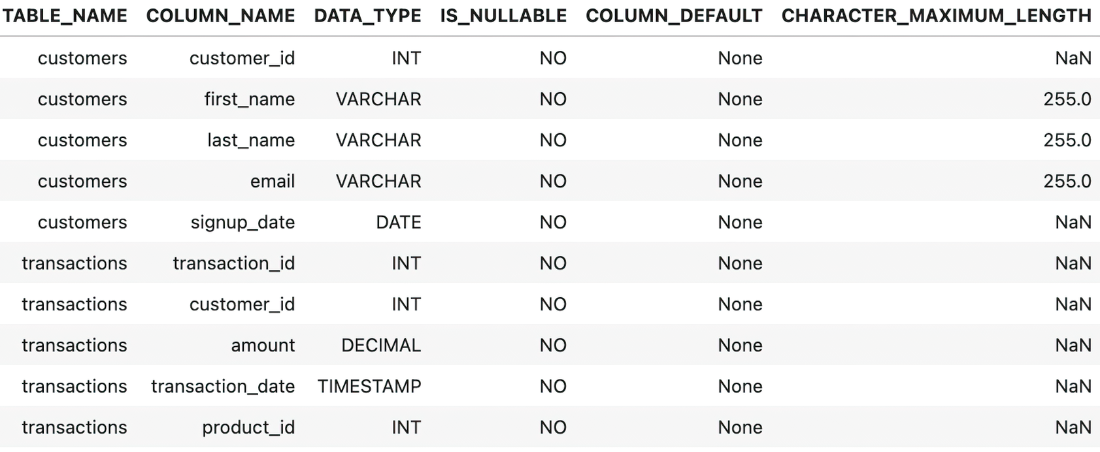
Use the information-schema figure to connect warehouse metadata with the schemas, tables, and columns that a catalog organizes. section 11.3.3

