liveBook · Manning

Metadata field

As explained in Learn Docker in a Month of Lunches, Second Edition

A metadata field is a named attribute containing descriptive information about a log record, such as its application, service, or image.

A metadata field is a named attribute containing descriptive information about a log record, such as its application, service, or image. Adding these fields makes filtering in Kibana easier. section 19.4

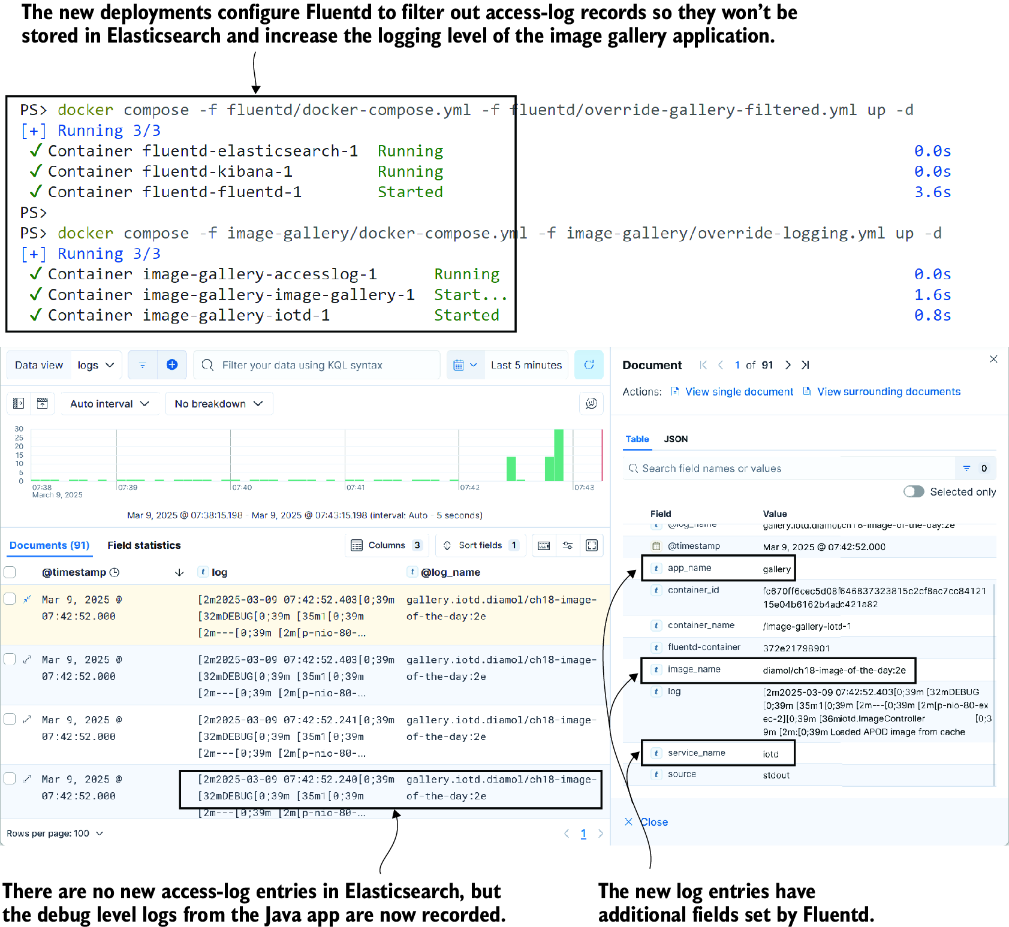
Fluentd enriches records with metadata fields while processing container logs. The same records can then be routed to different targets, such as Elasticsearch or stdout, without changing the application. section 19.4

Figure 19.14 Fluentd uses the tag in the log to filter out records and to generate new fields.
figure

The figure shows Fluentd using log tags to filter records and generate new metadata fields. section 19.4

Filtering and routing enriched logs

Access-log records can be filtered from Elasticsearch and echoed to stdout while retaining the same app, service, and image metadata. Changing the Fluentd configuration later sends them back to Elasticsearch without application changes. section 19.4

How Learn Docker in a Month of Lunches, Second Edition covers it

How deep it goes
Defines fields through app, service, and image examples, then demonstrates their use in Fluentd filtering and routing.
Examples
Uses app, service, and image fields, plus access-log filtering between stdout and Elasticsearch.
What you can do after
Operate/configure Fluentd to enrich records, filter access logs, and change destinations without modifying the application.
How it connects
Connects metadata fields with log records, Fluentd, Docker, tags, Kibana, Elasticsearch, stdout, and log routing.

Related concepts

This explainer was generated by Manning's knowledge graph from the text of Learn Docker in a Month of Lunches, Second Edition. The section links point to the parts of the book it draws on.