An ML serving engine is software specialized for executing machine learning models in operational environments. It manages model invocation and may optimize execution for processor instruction sets. section 9.4.2
Choose the execution surface alongside the data flow and model-hydration process. Treat pricing, latency, scale, modularity, user controls, and an exit path as production decisions rather than implementation details. section 9.4.2
Common execution choices include:
- Use specialist engines such as OpenVINO or TensorFlow Serving for optimized model execution. section 9.4.2
- Use database functions for modular, decoupled execution when application constraints are acceptable. section 9.4.2
- Use application servers for low-scale, permissive-latency and permissive-cost workloads. section 9.4.2
- Use Spark-like systems, Kubernetes, Kubeflow, or serverless platforms according to processing, scalability, cost, and modularity needs. section 9.4.2
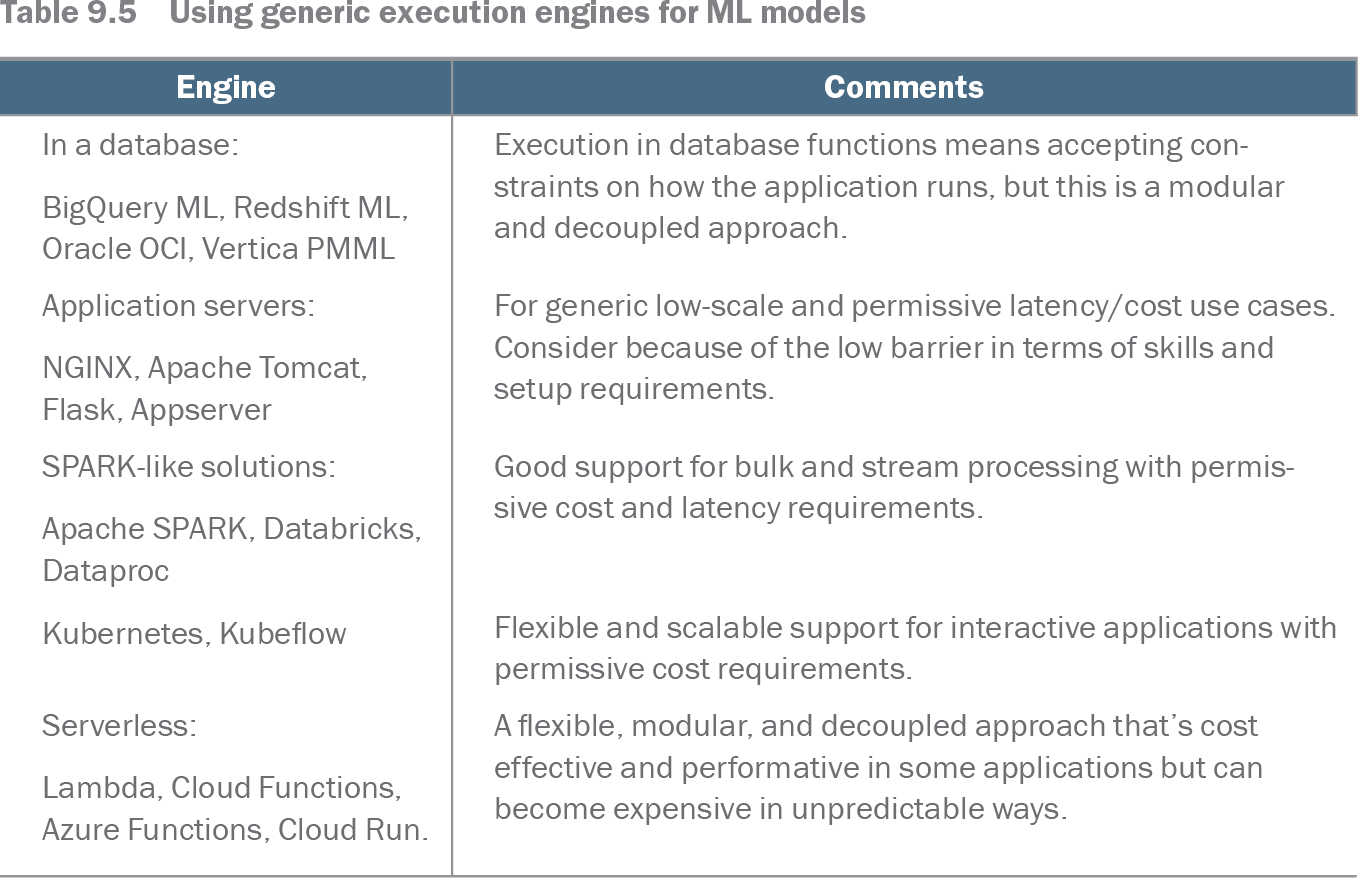
Table 9.5 Using generic execution engines for ML models (view table figure)
| Engine |
Comments |
|---|---|
| In a database: BigQuery ML, Redshift ML, Oracle OCI, Vertica PMML |
Execution in database functions means accepting constraints on how the application runs, but this is a modular and decoupled approach. |
| Application servers: NGINX, Apache Tomcat, Flask, Appserver |
For generic low-scale and permissive latency/cost use cases. Consider because of the low barrier in terms of skills and setup requirements. |
| SPARK-like solutions: Apache SPARK, Databricks, Dataproc |
Good support for bulk and stream processing with permissive cost and latency requirements. |
| Kubernetes, Kubeflow |
Flexible and scalable support for interactive applications with permissive cost requirements. |
| Serverless: Lambda, Cloud Functions, Azure Functions, Cloud Run. |
A flexible, modular, and decoupled approach that’s cost effective and performative in some applications but can become expensive in unpredictable ways. |
Compare generic execution engines by deployment surface, workload scale, latency tolerance, cost, flexibility, and processing mode. section 9.4.2