Model interpretation evaluates whether generated association rules are valid, meaningful, and useful for business decisions. It begins with data quality: junk values can produce rules that are technically generated but unusable. section 4.8
Interpret rules by checking for:
- Junk values, such as #NA, which indicate incorrect preparation. section 4.8
- Obvious relationships, such as purchases of packaging material with other items. section 4.8
- Common-sense relationships, such as potatoes, tomatoes, and onions, that add little business value. section 4.8
- Support, confidence, lift, and conviction thresholds; sort by lift and remove the most obvious rules. section 4.8
Retail association rules
A rule such as (Potatoes, Tomatoes) → (Onions) may look correct but offer little new insight. After filtering, accepted rules can inform merchandising decisions such as planogram improvements. section 4.8
Figure 4.24 An example of a planogram. Planograms are very useful for visual merchandising.
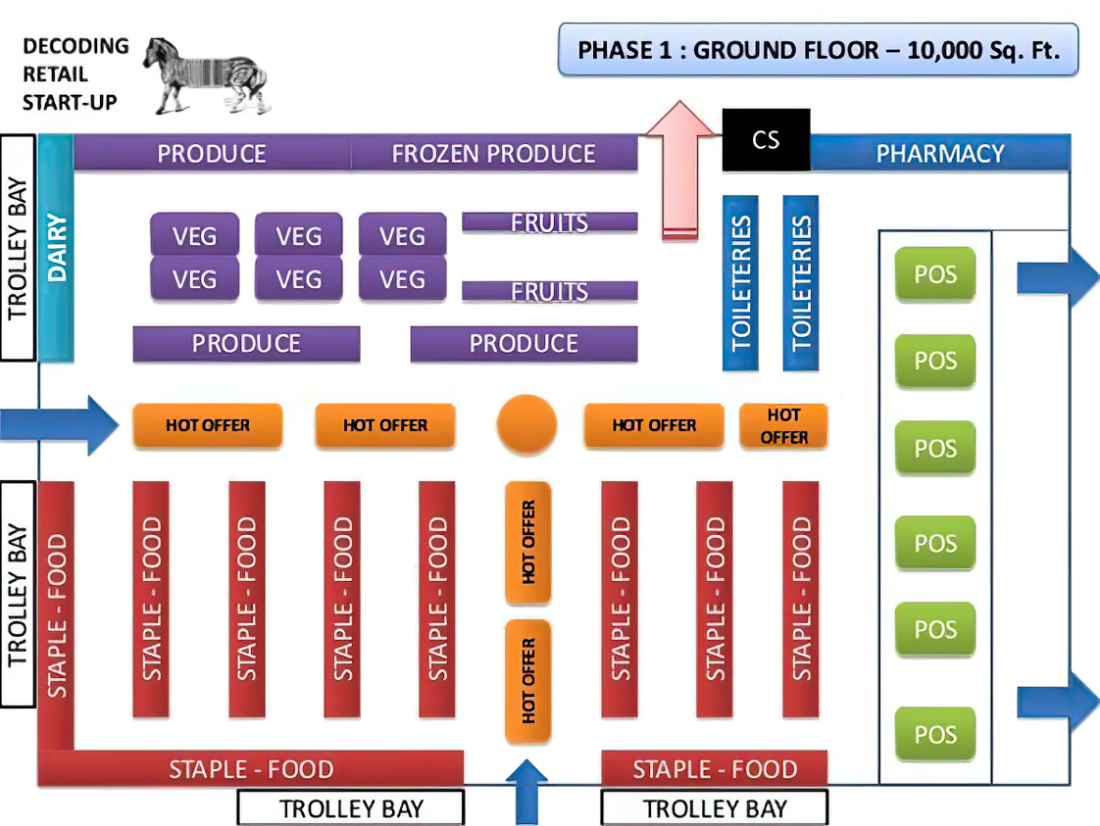
Use the planogram example to connect accepted association rules with visual merchandising decisions. section 4.8
