A module approval process reviews infrastructure-module changes before releasing them for use. A team can update a shared module, but a build system pauses release until designated approvers assess the change. section 5.4
A practical workflow is:
- Submit the changed module to the repository. section 5.4
- Notify infrastructure approvers and pause the build. section 5.4
- Request subject-matter review when the change affects specialized systems. section 5.4
- Release the module only after approval and verified migration steps. section 5.4
Database version change
The Beans team changes a database module to PostgreSQL 12. Review discovers that the upgrade could delete the previous database and create an empty one, so database specialists verify migration practices before release. section 5.4
Figure 5.13 An application team can update the database module. However, the team must wait for approval from subject-matter experts before being able to use the new release.
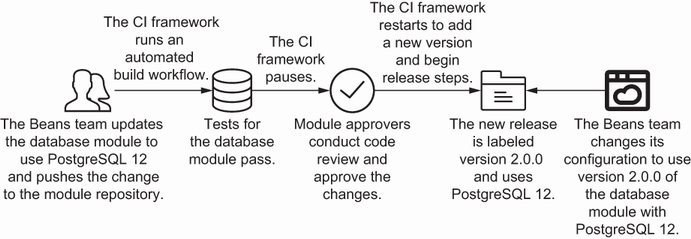
Shows the release gate between an application team's module update and expert approval. section 5.4
Figure 5.14 For disruptive module updates, the application team submits a ticket to the database team to verify database migration steps before releasing a new module version.
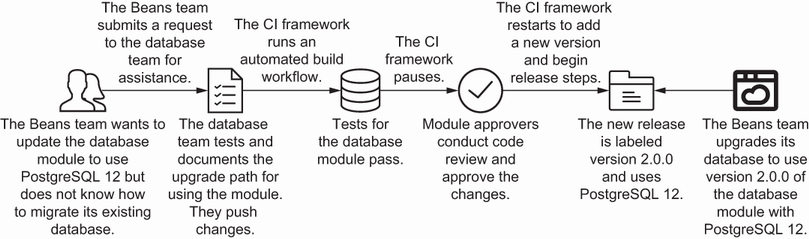
Shows specialist verification for disruptive database updates before releasing a module version. section 5.4
