A monolithic application keeps its functions tightly coupled. That contrasts with a microservices architecture, where services can be updated, scaled, replaced, and debugged independently. A monolith can still be a candidate for containerization; moving it into a container does not, by itself, split it into services. section 1.1 section 15.3.4
A three-tier Java application
A traditional three-tier Java application is one example of a monolith. If it runs on WebSphere or WebLogic, inspect its use of proprietary server features before considering a move to an open source server such as Tomcat or JBoss. That deployment change is distinct from a later redesign into microservices. section 16.2.1
Modernize incrementally while keeping the existing application running:
- Improve development and deployment first, including suitable language or framework changes. section 16.1
- Containerize suitable workloads with Migrate for Anthos, then add continuous integration, automated testing, continuous deployment, and observability. section 16.1
- Refactor toward microservices when ready. Workloads needing particular drivers or legacy support may instead move as VMs before later refactoring. section 16.2.1 section 15.3.4
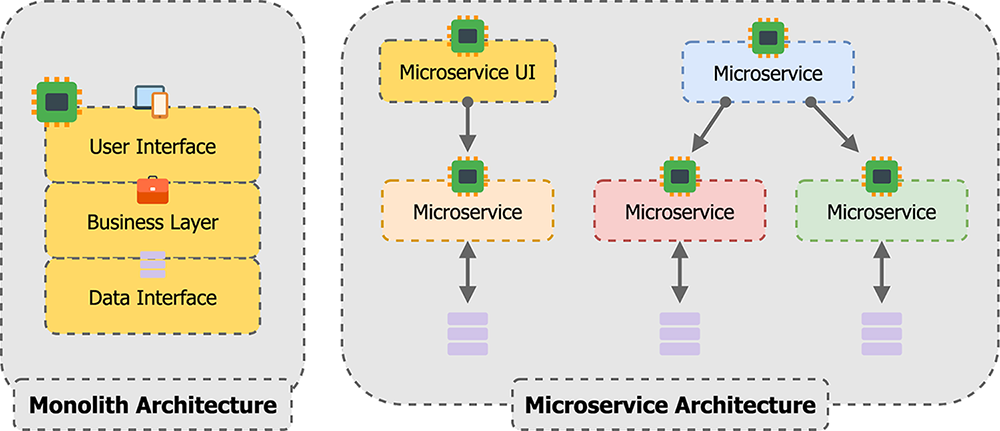
Compare the monolith and microservice architecture diagrams when deciding which changes alter deployment and which change the application’s structure. section 16.2.1







