A moonshot goal is a highly ambitious, transformative target intended to inspire creativity, innovation, effort, and meaningful progress. It describes the destination, not the next task. section 4.3.2
Use the moonshot to provide purpose and direction, but pursue it through attainable goals. Breaking a large ambition into specific, measurable tasks makes progress manageable and visible. section 4.3.2
Apply the distinction this way:
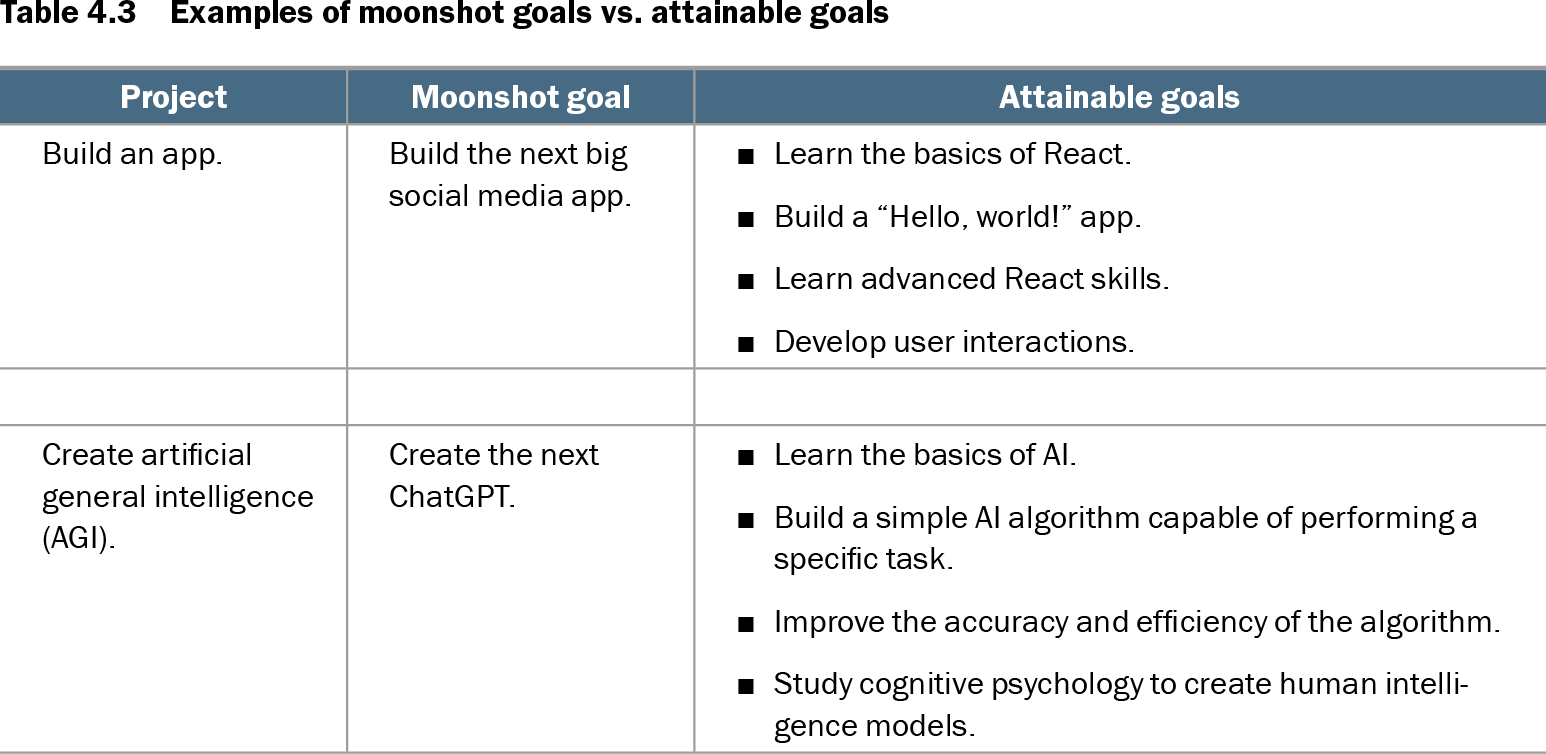
- Moonshot: build the next major social media app. section 4.3.2
- Attainable steps: learn React basics, build a simple app, study advanced features, and develop user interactions. section 4.3.2
- Moonshot: create the next ChatGPT; attainable steps include learning basic AI, building a task-specific algorithm, improving it, and studying cognitive psychology. section 4.3.2
For weekly learning, treat an outrageous objective as inspiration rather than a pass-or-fail commitment. Timebox realistic objectives, aim to complete roughly 70% or more, and avoid self-criticism when the moonshot remains unfinished. section 3.1.4
A practical learning sequence
A developer might aim to create a website from scratch, add CSS, and commit it to GitHub. Each activity is concrete enough to schedule and complete while contributing toward broader skill growth. section 3.1.4
Table 4.3 Examples of moonshot goals vs. attainable goals (view table figure)
| Project |
Moonshot goal |
Attainable goals |
|---|---|---|
| Build an app. |
Build the next big social media app. |
|
| Create the next ChatGPT. |
|
Compare transformative moonshots with the smaller learning tasks that make them actionable. section 4.3.2
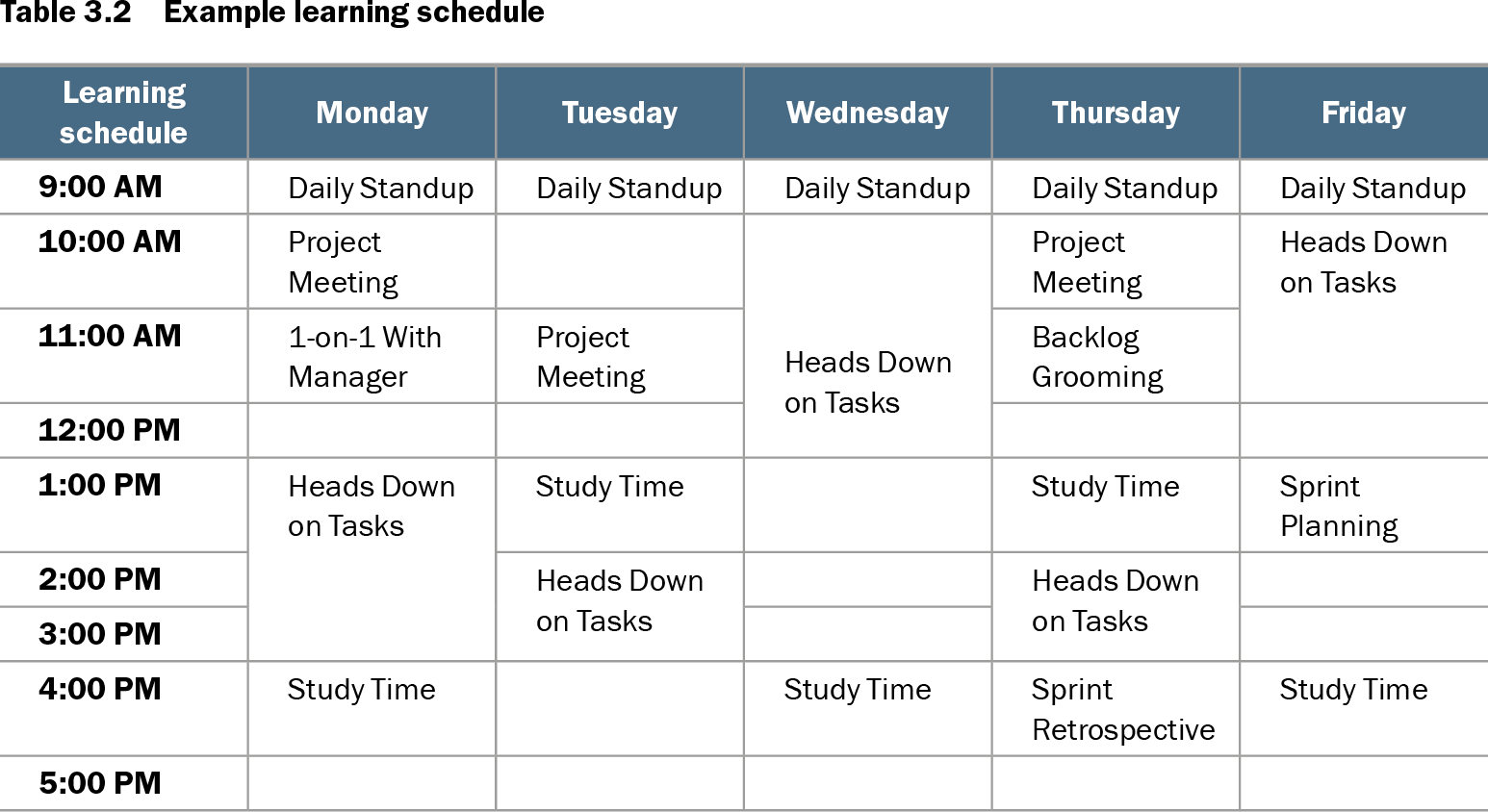
Table 3.2 Example learning schedule (view table figure)
| Learning schedule |
Monday |
Tuesday |
Wednesday |
Thursday |
Friday |
|---|---|---|---|---|---|
| 9:00 AM |
Daily Standup |
Daily Standup |
Daily Standup |
Daily Standup |
Daily Standup |
| 10:00 AM |
Project Meeting |
Heads Down on Tasks |
Project Meeting |
Heads Down on Tasks |
|
| 11:00 AM |
1-on-1 With Manager |
Project Meeting |
Backlog Grooming |
||
| 12:00 PM |
|||||
| 1:00 PM |
Heads Down on Tasks |
Study Time |
Study Time |
Sprint Planning |
|
| 2:00 PM |
Heads Down on Tasks |
Heads Down on Tasks |
|||
| 3:00 PM |
|||||
| 4:00 PM |
Study Time |
Study Time |
Sprint Retrospective |
Study Time |
|
| 5:00 PM |
Use the sample learning schedule to see how study time can be placed alongside regular developer work. section 3.1.4