Prompt structure organizes a request around the desired outcome and the conditions that must hold. For code changes, state what already works, name the defect, and give concrete acceptance criteria rather than asking for a vague improvement. section 10.8
Specify observable gameplay constraints
A log-movement request preserves the successful behavior—crossing the river—then identifies overlap and requires spacing, equal speed, and no collisions. Those details give the tool a testable target for its proposed changes. section 10.8
Treat the generated implementation as a proposal. Review the diff before accepting changes, and check the running game to confirm that the requested behavior actually appears. section 10.8
Figure 10.10 There is a diff interface that comes up in Cursor. You can accept individual changes or accept the entire file if you like.
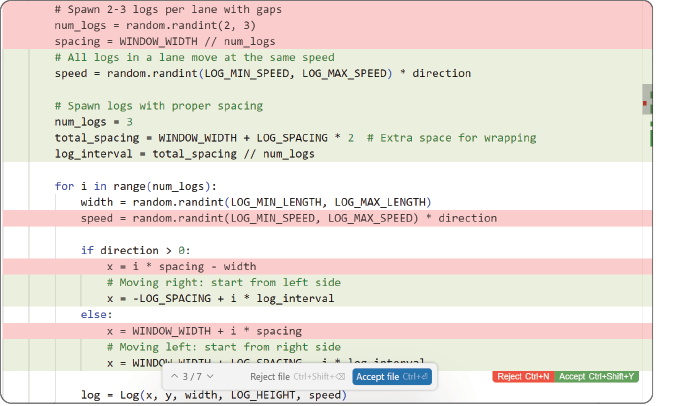
Use the diff interface to inspect and accept individual generated changes or the whole file. section 10.8
