An endpoint can feel quick with test data, then bog down as users and records multiply. The N + 1 problem happens when one query fetches a collection and another query fetches related data for each item: 50 orders plus 50 user lookups means 51 database calls. section 6.8.1
The trap often hides behind ORM property access. In a loop, reading order.User.Name can trigger a separate query for each order when lazy loading is enabled. With 1,000 users, fetching each user's orders this way can mean thousands of network round-trips, high database CPU, and slow responses. section 6.8.1 section 8.3.2
Avoid the trap by making data access deliberate:
- Fetch related records in a batch instead of triggering a query for each item. section 6.8.1 section 8.3.2
- Use eager loading when the response needs related data; for example, Entity Framework can use Include(o => o.User) to fetch orders and users together. section 6.8.1 section 8.10
- Treat property access that reaches external data as I/O, not as a harmless in-memory lookup. section 8.3.2
Figure 6.13 The N+1 Performance Trap: Fetching related child records inside a loop cripples your database with excessive network chatter. The architectural fix is to batch those requests into a single trip using Eager Loading or a DataLoader.
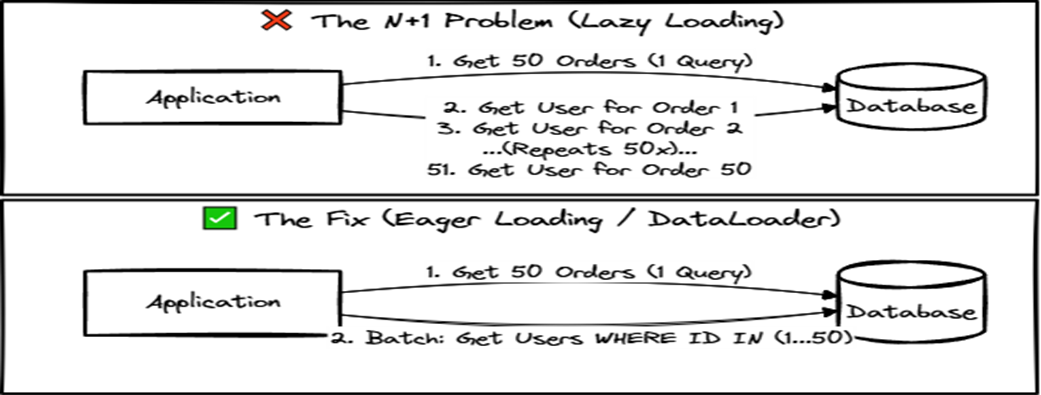
The figure contrasts fetching child records inside a loop with batching requests through eager loading or a DataLoader. section 6.8.1