A named slot is a <slot> with a name attribute in a shadow DOM. It receives child nodes from the custom element only when their slot attribute matches that name. section 8.4
Use named slots to let consumers provide content for specific regions while the component retains its own structure.
- Each name should be unique within a shadow root; a component can define multiple named slots. section 8.4
- Named slots can coexist with a default unnamed slot. An empty slot="" value is treated as content for a named slot projection. section 8.4 section 8.9
Component layout regions
A component can provide named regions for title, media, and actions, allowing consumers to supply content for each without exposing the component’s internal markup. section 8.9
Figure 8.3 This diagram shows how elements from the main DOM can be projected into the shadow DOM of a custom element using the <slot> element. When you use a <slot> in a shadow DOM, the children of the custom element in the main DOM are projected into it as slotted content.
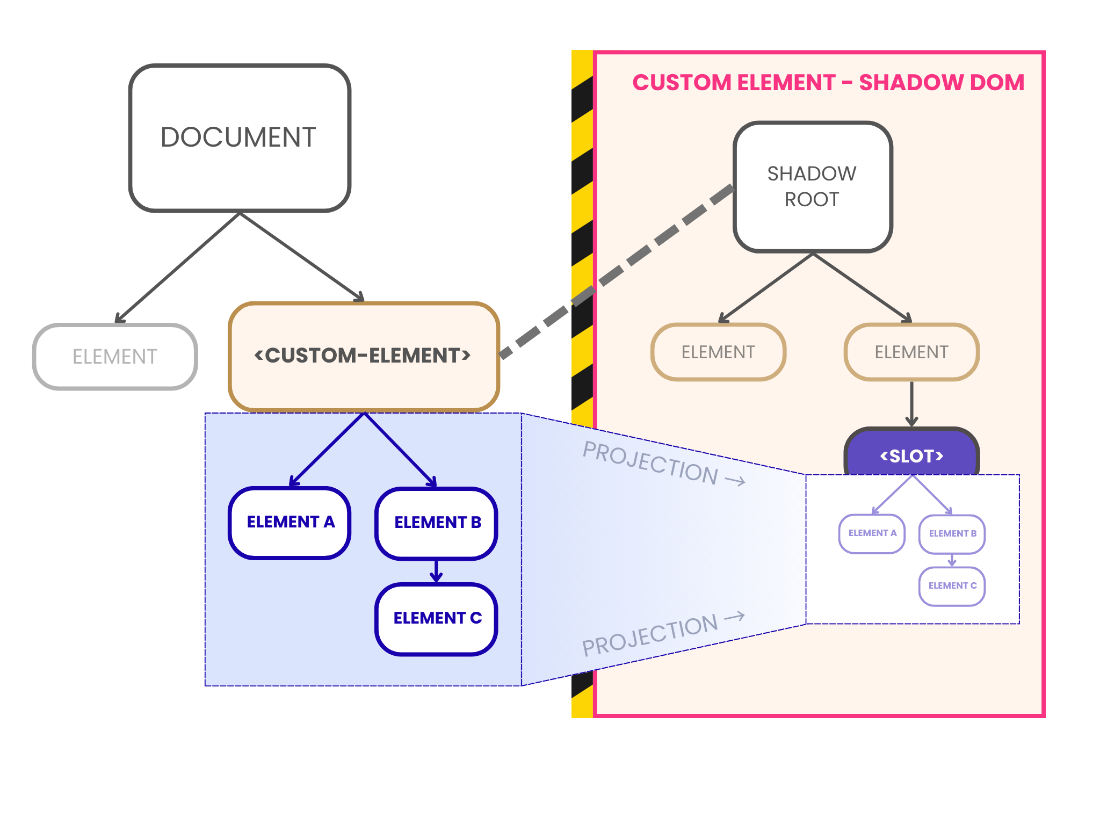
See how child elements from the main DOM are projected into slots in a custom element’s shadow DOM. section 8.4

