A lost cause is a person who will experience the undesirable outcome regardless of whether a promotion or other treatment is applied. In churn analysis, the subscriber leaves with or without the promotion. section 8.3.3
Lost causes are non-responders: treatment does not change their outcome. They differ from sure things, who remain regardless; persuadables, who benefit from treatment; and sleeping dogs, who are harmed by it. section 8.3.3
Promotion and churn
A retention promotion sent to a lost cause spends incentive value without preventing churn. Uplift targeting therefore seeks persuadables and avoids lost causes, sure things, and especially sleeping dogs. section 8.3.3
Figure 8.5 In attempts to influence behavior, we break down the target population into these four segments. Given limited resources, we want to target our influence efforts on the persuadables and avoid the others, especially the sleeping dogs.
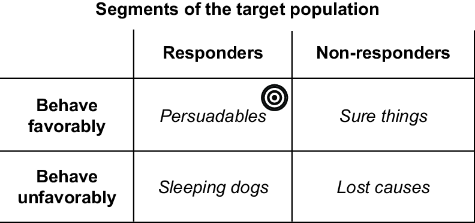
Use the four-segment diagram to compare lost causes with the other counterfactual response groups and identify why targeting matters. section 8.3.3
