A sleeping dog is someone who achieves the favorable outcome without an intervention but experiences the unfavorable outcome when the intervention is applied. In churn prevention, the subscriber would stay without a promotion but leave after receiving one. section 8.3.3
Counterfactual subscriber segments distinguish who should receive an intervention:
- Persuadables respond favorably to a promotion and can be retained. section 8.3.3
- Sleeping dogs respond negatively, so intervention can create the unwanted outcome. section 8.3.3
- Sure things stay without treatment, while lost causes churn regardless of treatment. section 8.3.3
A retention email that backfires
A subscriber who would have remained loyal may receive a marketing email, decide the company sends too much spam, and cancel. The email acts as the intervention that wakes the sleeping dog. section 8.3.3
Figure 8.5 In attempts to influence behavior, we break down the target population into these four segments. Given limited resources, we want to target our influence efforts on the persuadables and avoid the others, especially the sleeping dogs.
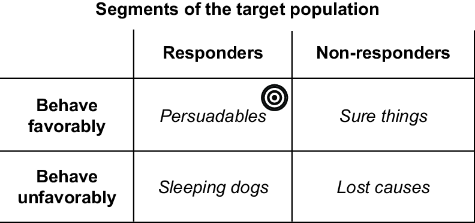
Use the segment diagram to compare sleeping dogs with persuadables, sure things, and lost causes when allocating limited promotion resources. section 8.3.3
