A network partition is a communication failure that divides distributed-system participants into groups unable to communicate. Dropped or delayed messages can force a system to choose between remaining consistent and remaining available. section 6.2 section 6.0
CAP frames the consequence: during a partition, a system can favor consistency by rejecting some requests, or availability by returning responses that may contain outdated data. Partition tolerance is treated as essential because network instability is inevitable. section 6.2
Common design choices during and around partitions include:
- CP systems preserve the most recent value but may fail requests during a partition. section 6.2
- AP systems continue responding during a partition but may return stale data. section 6.2
- PACELC adds normal-operation behavior: after choosing availability or consistency during a partition, a system also weighs latency against consistency when communication is healthy. section 6.3
Database behavior under partition
An AP database can keep serving requests while nodes cannot communicate, but different nodes may expose outdated values. A CP database can reject requests until coordination is restored. DynamoDB is presented as a PA/EL example, while CockroachDB illustrates PC/EC. section 6.2 section 6.3
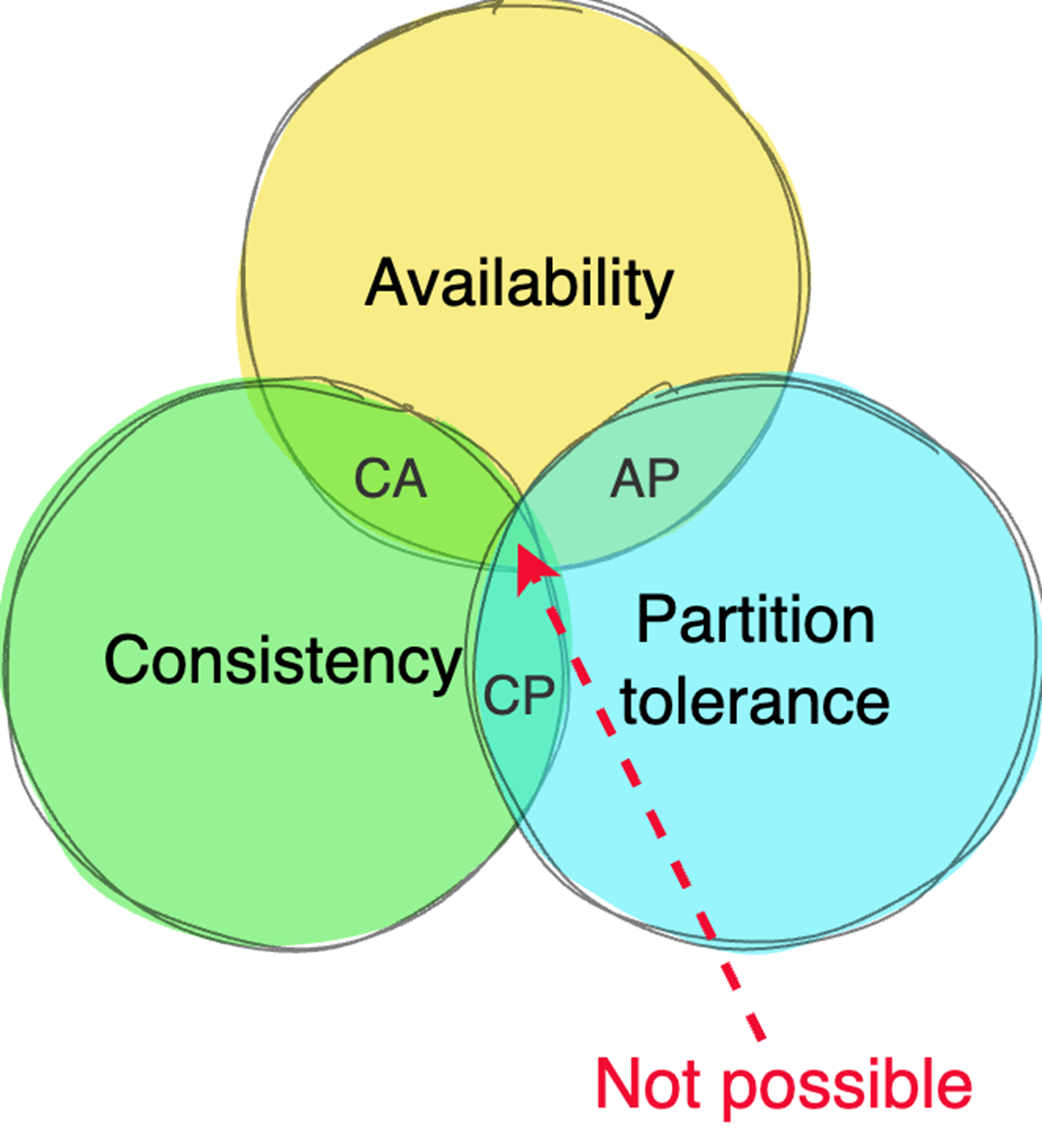
Use the CAP trade-off figure to compare consistency, availability, and partition tolerance. section 6.2
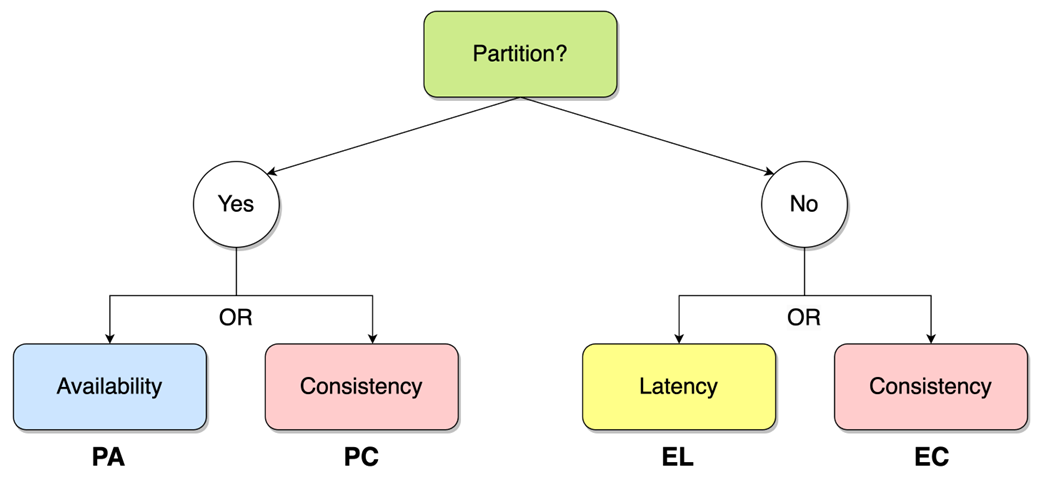
Use the PACELC figure to compare partition-time choices with latency-versus-consistency choices during normal operation. section 6.3


