A neutral midpoint is a response option representing neither a positive nor a negative position on an ordered scale. Including “Neither Agree nor Disagree” can reduce arbitrary answers when respondents lack a clear opinion. section 6.2.2
Use a neutral midpoint within a deliberately designed response scale:
- Balance the scale with equal positive and negative options. section 6.2.2
- Distinguish neutrality from an opt-out such as “Unsure/Don’t Know,” which serves respondents without relevant knowledge or certainty. section 6.2.2
- Choose the number of response options carefully; five to seven items often provide usable granularity without excessive confusion or arbitrary selection. section 6.2.2
NPS scale
The 0–10 NPS question illustrates how reporting rules can complicate an apparently balanced scale: scores 7 and 8 are treated as neutral, while 0–6 are negative and 9–10 are promoters. section 6.2.2
Figure 6.6 Varying methods of presenting the same response format
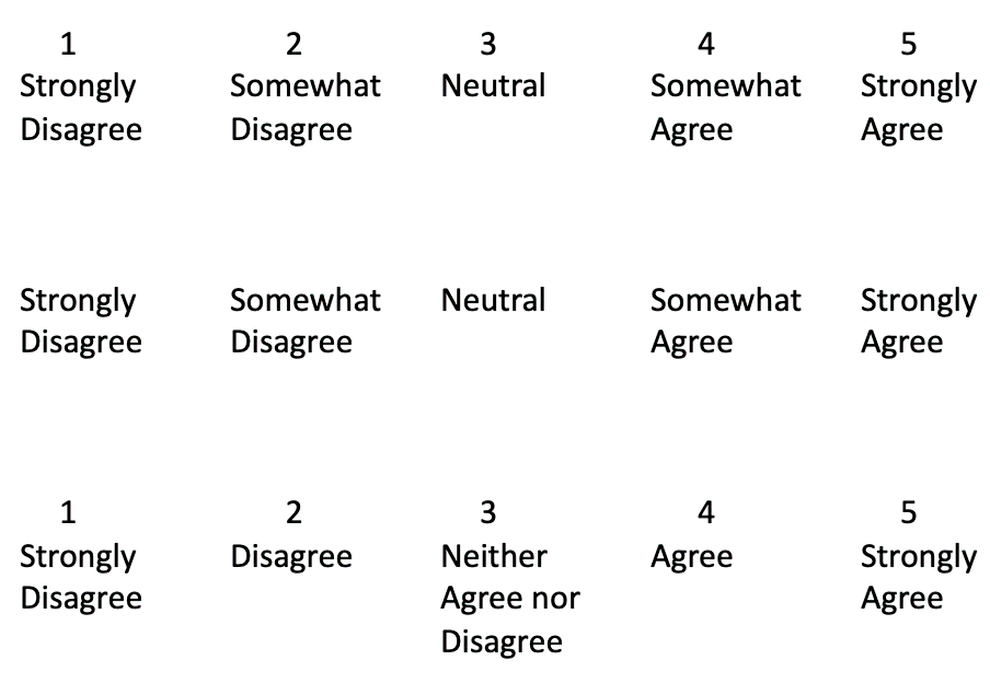
Compare alternative ways to present the same response format before selecting a survey layout. section 6.2.2
