A node role is the functional or structural part a node plays within a graph or network. Role describes how a node is positioned relative to other nodes, rather than only what the node represents. section 9.1.1 section 1.1
Node roles support graph analysis and machine learning. A structural-role method places nodes with similar positions near one another, even when they belong to different communities. A homophily method instead groups nodes with similar neighbors or interests. section 9.1.1
Use node roles to:
- Represent important positions in a network and investigate information flow. section 1.1
- Improve predictive models by encoding users’ positions or roles. section 1.1
- Analyze structural roles in coauthorship networks or determine router roles on the internet. section 9.1.1
Bridges between communities
In a graph with two communities, nodes D and F both act as bridges between the communities. Because they share this structural role, a structural-role embedding can encode them close together. section 9.1.1
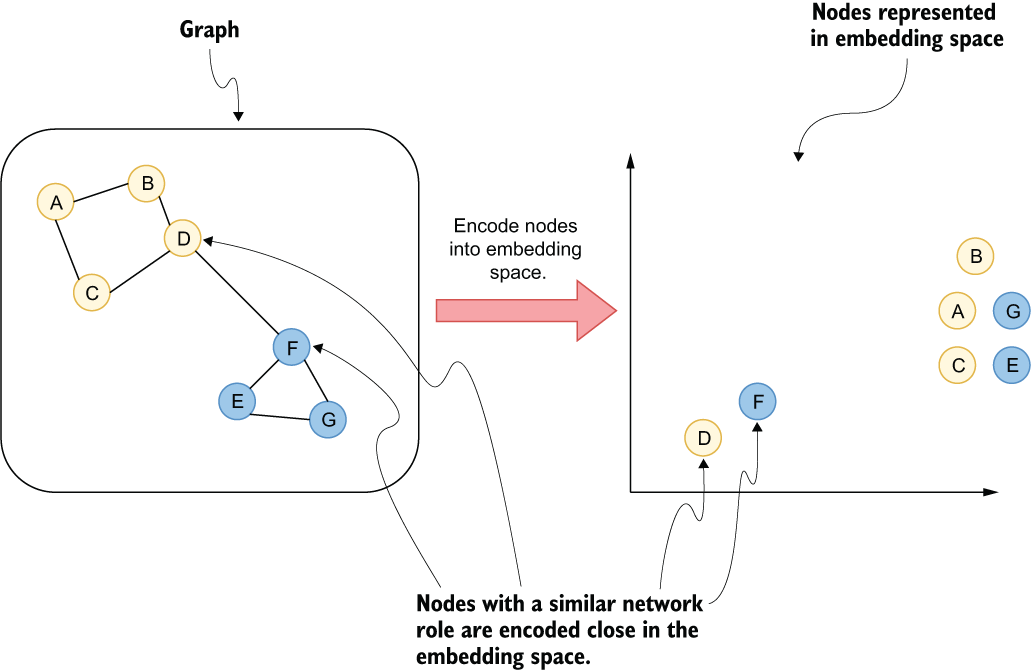
Visualizes nodes encoded close together because they share similar network structural roles. section 9.1.1