liveBook · Manning

Api model

As explained in Automating API Delivery

An API model is a conceptual representation of an API's business operations and data models before they are expressed in an API definition.

An API model represents the business operations and data models behind an API before they are expressed in an API definition. Designers derive it from user stories, job stories, the user journey, and domain modeling, using it to clarify the intended API before review. section 5.1

Use the model to:

  • Make domain and design decisions explicit before proposing an API definition. section 5.1
  • Give reviewers context for checking consistency and advising on API improvements. section 5.1
  • Support an agreed API contract that server-side and client-side teams can build against. section 5.1
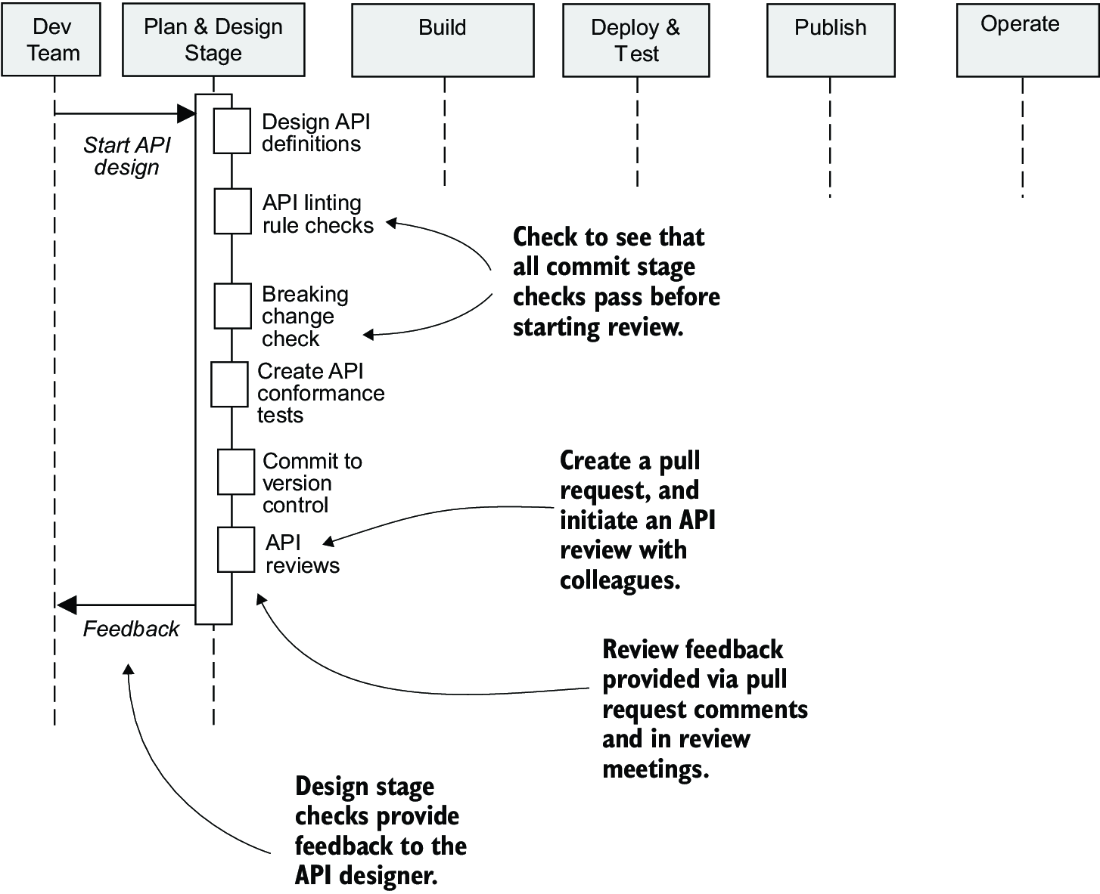
Figure 5.1 API reviews happen at the design stage of your APIOps workflow. API reviews start after the automated checks all pass. The API review is completed when all review comments have been resolved and the PR is merged.
figure

Place API modeling before automated checks and API review in the APIOps design workflow. section 5.1

How Automating API Delivery covers it

How deep it goes
Explains the model’s inputs and purpose but stops short of prescribing a modeling notation or detailed construction procedure.
Examples
Uses business operations, data models, user stories, job stories, and user journeys as modeling inputs.
What it assumes
Assumes access to user or job stories and a user journey, while connecting domain modeling to API design.
What you can do after
Build it from scratch to clarify business operations and data models before teams implement an agreed API contract.
How it connects
Connects API modeling with domain modeling, user stories, job stories, user journeys, API definitions, and API design reviews.

This explainer was generated by Manning's knowledge graph from the text of Automating API Delivery. The section links point to the parts of the book it draws on.