An OpenID Provider (OP) is an identity provider that manages user identities, authenticates users, and issues OpenID Connect tokens to relying-party applications. It lets an application outsource login to services such as Google, GitHub, Auth0, Okta, Microsoft Entra, or AWS Cognito. section 7.6
An OIDC authentication flow connects three parties:
- The relying party registers with the OP and redirects the user to its authentication endpoint. section 7.6
- The user authenticates with the OP and grants consent. section 7.6
- The OP returns an ID token and optionally an access token; the application uses the access token for authorized requests. section 7.6
Figure 7.14 OIDC allows applications to use OPs to manage their user identities securely. In this case, the application redirects the user to the OIDC server to log in and give consent, and it obtains an ID token and an access token in return.
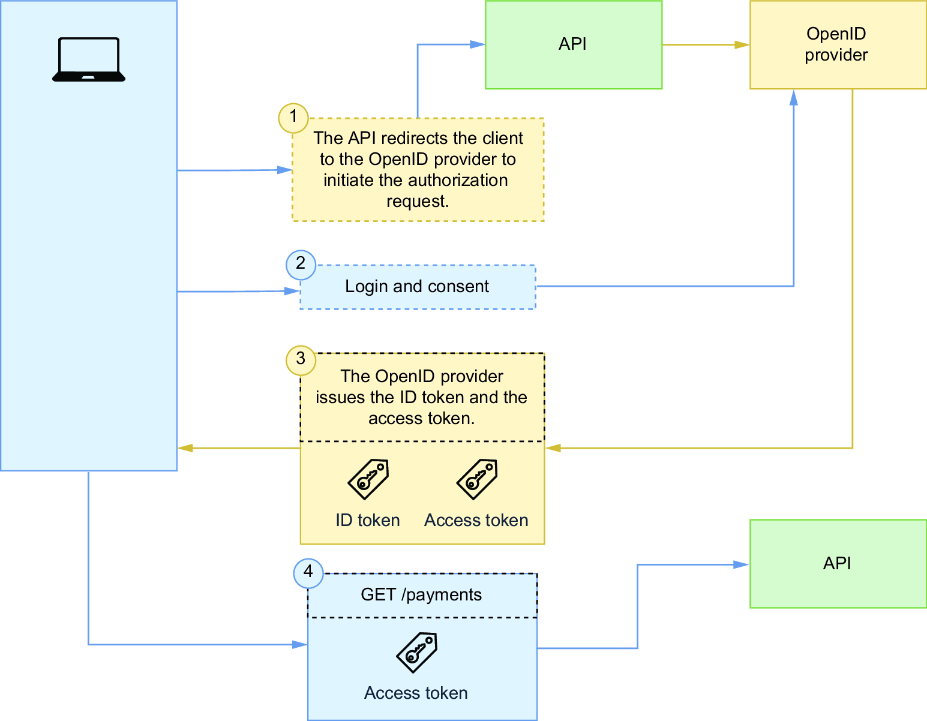
Follow the flow from application redirect through user login and consent to token issuance. section 7.6
