liveBook · Manning

Operational continuity

As explained in Data-Driven Cybersecurity

The ability to maintain essential organizational operations without interruption during or after disruptive events.

Operational continuity means maintaining essential services without interruption when disruptive events threaten systems, data, or staff. In healthcare, continuity directly protects patient care and therefore becomes a business objective for security planning. section 4.2.1 section 4.3.3

Security metrics make continuity visible through measures such as:

  • Incident response time, showing how quickly threats are contained and downtime is reduced. section 4.3.4
  • Ransomware mitigation, including whether successful attacks disrupted critical operations. section 4.3.4
  • Operational cost savings and avoided downtime, translating technical protection into business value. section 4.3.3 section 4.3.4

HealthSecure’s continuity case

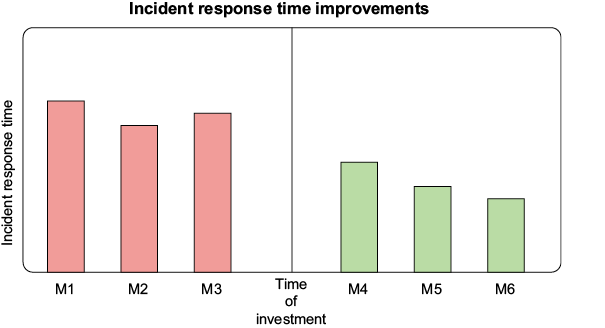
HealthSecure invested $500,000 in AI-powered threat detection to protect patient data and maintain uninterrupted operations. Its presentation reported response-time reduction from 24 to 4 hours, zero successful ransomware attacks during the past year, and $500,000 in operational savings from reduced incident downtime. section 4.3.4

Figure 4.5 Example slide 4: Incident response time improvements before and after investment.
A graph of a graph showing a number of different times

Description automatically generated with medium confidence

Compare incident-response performance before and after the security investment to show how faster mitigation supports continuity. section 4.3.4

How Data-Driven Cybersecurity covers it

How deep it goes
Connects continuity to objectives, KPIs, response times, downtime, and ROI but stops short of specifying continuity procedures.
Examples
Uses MediHealth and HealthSecure scenarios, response-time comparisons, ransomware results, compliance results, and financial ROI measures.
What it assumes
Assumes familiarity with organizational objectives and cybersecurity investments while defining continuity through healthcare business needs.
What you can do after
Evaluate cybersecurity investments by interpreting continuity KPIs, avoided downtime, incident response improvements, and estimated financial returns.
How it connects
Connects operational continuity with security metrics, regulatory compliance, patient trust, incident response, ransomware mitigation, and HIPAA compliance.

Related concepts

This explainer was generated by Manning's knowledge graph from the text of Data-Driven Cybersecurity. The section links point to the parts of the book it draws on.