An opportunity is a customer-oriented need, pain point, desire, or strategic possibility that can create business value. AI products succeed when they match technology to a meaningful opportunity rather than chase excitement around AI. section 1.3.1
Shape and assess opportunities by:
- Sourcing ideas from users, competitors, team expertise, technological developments, regulations, and market positioning. section 2.1 section 2.4
- Prioritizing specific user problems where AI can automate routine work, augment human output, improve outcomes, or personalize experiences. section 1.3.1 section 2.4
- Scoring candidates against user impact, business value, and technical feasibility while balancing quick wins with longer-term investments. section 2.4
- Shaping vague ideas with evidence, user feedback, and experiments, then choosing a careful research-first or fast iterative approach according to risk. section 2.3 section 2.4
From fixed dashboard to conversational access
A fixed dashboard exposes only a small, preselected portion of company data. A conversational interface can let users access more relevant data points when needed, creating tangible value through flexibility and personalization. The opportunity is not “add AI,” but improve how customers work with existing information. section 1.3.1
Figure 2.9 When to be careful versus fast: comparing the ready, aim, fire and ready, fire, aim approaches
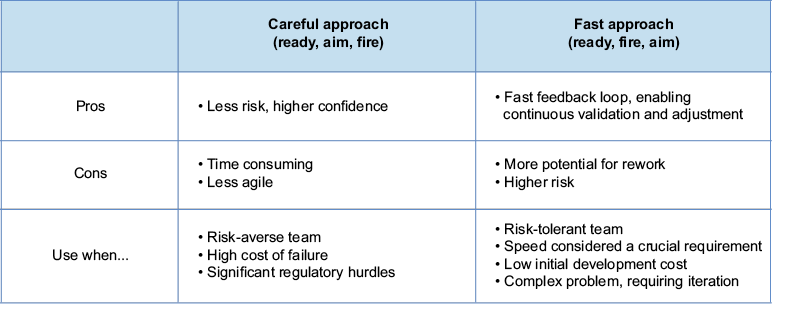
Compare ready, aim, fire with ready, fire, aim to choose between research-first caution and fast experimentation when shaping an opportunity. section 2.3
