Organizational context is the mission, objectives, leadership expectations, structure, values, critical assets, and regulatory responsibilities that shape cybersecurity direction. Security works best when it supports business goals rather than operating as a separate technical function. section 5.2 section 5.2.1
Apply organizational context by:
- Translating threats into financial, operational, and reputational risks that executives can compare with other business risks. section 5.2
- Prioritizing security investments according to leadership expectations, organizational risk appetite, and the threats most likely to disrupt objectives. section 5.2
- Reporting cybersecurity through business continuity, customer trust, regulatory positioning, and measurable outcomes rather than raw activity counts. section 5.2
Mission and values shape security priorities
For Honest Tea, sustainability, transparency, and social responsibility support protecting customer health data and proprietary formulas, communicating breaches transparently, and engaging stakeholders proactively. For Life is Good, optimism and community support favor secure customer interactions, resilient operations, and protection of community data and brand reputation. section 5.2.1
Figure 5.2 An example of aligning cybersecurity initiatives within the business environment and a typical reporting structure. CISOs most often report to the CIO. Also, the CISO will sometimes report directly to the board.
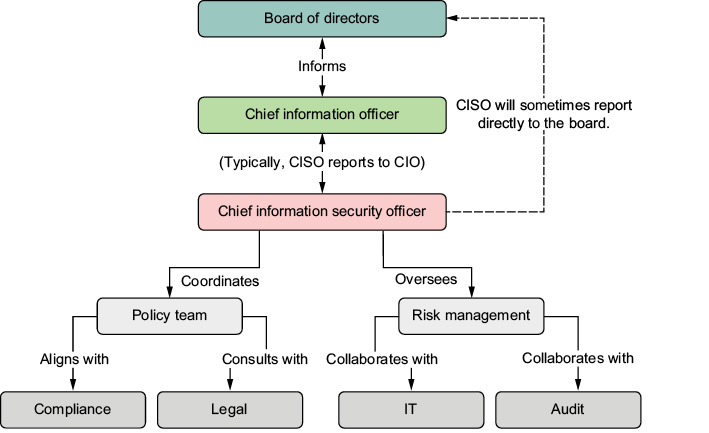
Use the reporting-structure figure to relate cybersecurity initiatives to the wider business environment and clarify common CISO reporting relationships. section 5.2
Figure 5.3 An organization’s core beliefs and directional goals are foundational to shaping its cybersecurity policies and posture.
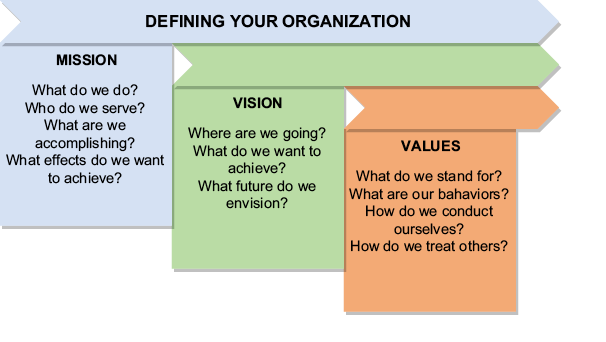
Use the core-beliefs figure to connect organizational direction with cybersecurity policies and overall security posture. section 5.2
