An organizational model structures what you know about a customer, including the problems and opportunities prompting an engagement, the organizational context shaping them, relevant stakeholders, and possible solutions. It turns vague project expectations into requirements that can be negotiated, managed, and signed off. section 2.3 section 2.3.2
Build the model iteratively around the issues that justify the project:
- Map stakeholders onto the organizational chart, including their roles, departments, and project touchpoints. section 2.3 section 2.3.2
- Record affected business units and connect project impact to priorities such as revenue, cost, or market growth. section 2.3
- Describe the organizational context: mission or vision, external factors, strategy, and value-chain relationships. section 2.3.2
- Capture the perceived problems and opportunities, then document solution ideas without treating them as settled requirements. section 2.3.2
- Use stakeholder knowledge to clarify what success must mean before the project budget is spent; also inspect system architecture and nonfunctional constraints. section 2.3
The Bike Shop
An organizational chart places project initiators in IT while identifying end users in manufacturing, marketing, and operations within retail. Dots mark the departments and people where the project touches the customer organization. section 2.3.2
Figure 2.1 The Bike Shop organizational chart. Dots represent stakeholders and users, the touchpoints for the project.
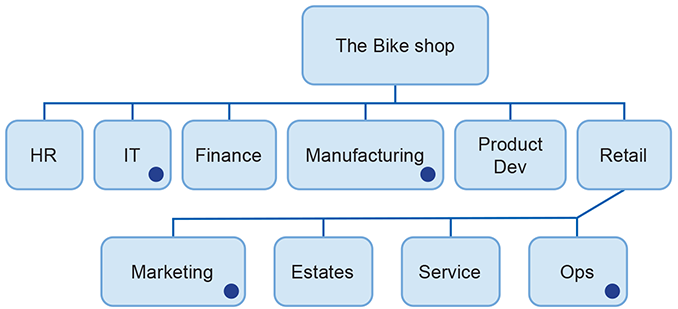
Inspect the organizational chart to see how departments, responsibilities, stakeholders, users, and project touchpoints relate. section 2.3.2
