An output format, or response format, is the structure and set of options through which someone answers a question or assessment item. In self-report measures, the format helps turn perceptions, attitudes, beliefs, or experiences into data for analysis. section 6.2.2 section 6.4
Small changes in response formats, rating scales, or question wording can substantially affect answers. When designing or evaluating a survey, consider these choices together: a well-structured response format cannot resolve an ambiguous or leading question. section 6.2.2
To improve the quality of self-report data:
- Use a balanced scale with a moderate number of response items, usually five or seven. section 6.4
- Check question wording for ambiguity, leading language, double-barreled statements, and negative wording. section 6.2.2 section 6.4
- Test variations in formats and scales when measuring an abstract concept, with the aim of reducing measurement error. section 6.2.2
Figure 6.6 Varying methods of presenting the same response format
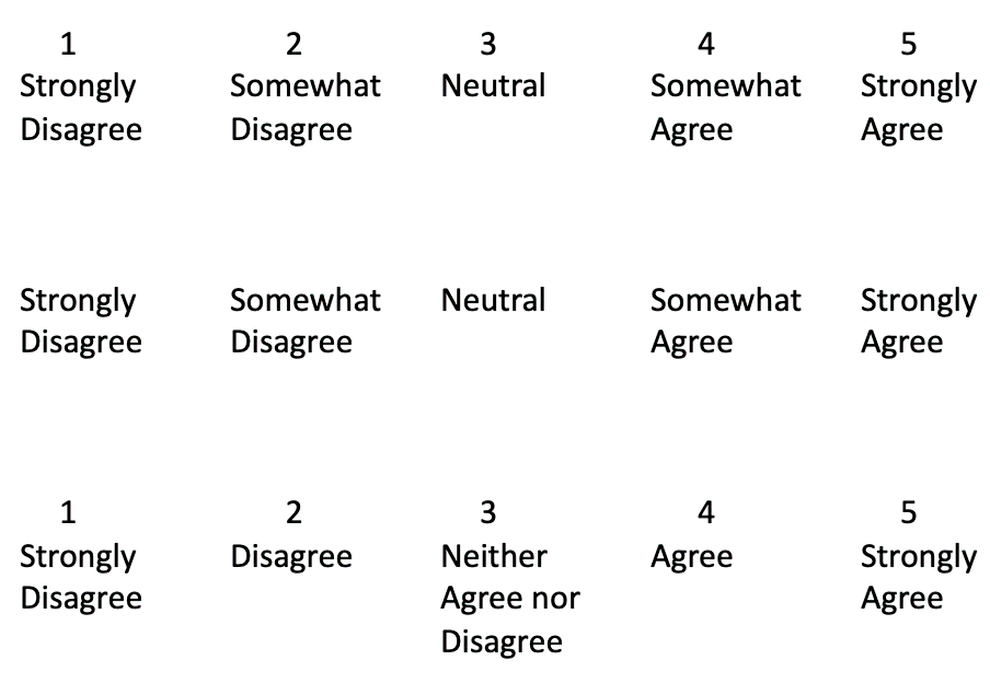
Compare ways of presenting the same response format and consider how presentation might affect responses. section 6.2.2