liveBook · Manning

Palm-vein scanning

As explained in Software Security for Developers

Palm-vein recognition is biometric authentication that identifies a person from the vein patterns inside the palm, typically captured with infrared sensors.

Palm-vein scanning is biometric authentication that identifies a person from the vein patterns inside the palm. Infrared sensors capture these internal patterns, making them difficult to replicate or spoof. The technique suits high-security environments but remains uncommon because it requires specialized hardware. section 15.1.5 section 15.1

Palm-vein scanning is most appropriate when:

  • A system needs contactless identity verification in a high-security setting. section 15.1
  • The deployment can support dedicated infrared scanning hardware. section 15.1.5
  • The organization accepts lower availability than fingerprint or facial authentication. section 15.1.5
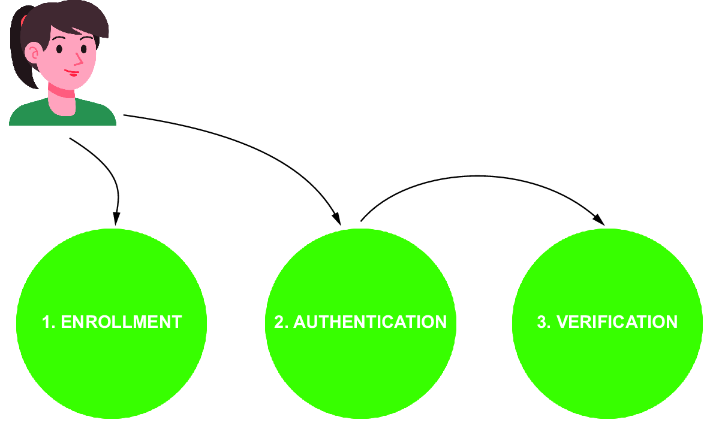
Figure 15.1 Biometric authenticatation is a three-step process. First, a user registers their data. Then the user tries to authenticate and be verified by the system.
figure

Follow the biometric authentication flow from user enrollment through authentication and verification before access is granted. section 15.1.5

How Software Security for Developers covers it

How deep it goes
Defines infrared capture and security advantages but stops short of hardware integration or implementation details.
Examples
Uses ATMs, secure facilities, and health-care authentication systems as representative deployment examples.
What you can do after
Evaluate whether specialized palm-vein hardware fits a high-security authentication requirement.
How it connects
Connects biometric authentication with infrared sensors, device verification, WebAuthn, and cryptographic authentication tokens.

Related concepts

This explainer was generated by Manning's knowledge graph from the text of Software Security for Developers. The section links point to the parts of the book it draws on.