A parametric curve maps parameter values to points. In two dimensions, coordinate functions x = fₓ(t) and y = fᵧ(t) produce one point for each t; the same idea extends to three dimensions. section 5.2.2 section 7.2
This representation turns geometry into programmable formulas used in CAD, games, bitmap vectorization, splines, and other nonlinear geometric work. section 5.0 section 5.2 section 5.2.2
Key geometric properties include:
- Differentiate each coordinate to obtain the tangent vector (fₓ′(t), fᵧ′(t)), which describes the curve’s local direction. section 5.2.2
- Join pieces smoothly by matching tangent directions; equal vector lengths are unnecessary when one tangent is a positive scalar multiple of the other. section 5.2.2
- Use piecewise linear and quadratic curves to construct continuous shapes, then apply the same ideas to custom splines. section 5.2.2 section 5.2
A smooth joined curve
A curve made from linear and quadratic pieces can remain smooth at their junction when their tangent vectors share direction, even if their speeds differ. section 5.2.2
Figure 5.13 A continuous and smooth parametric curve made of two pieces: a linear one and a quadratic one
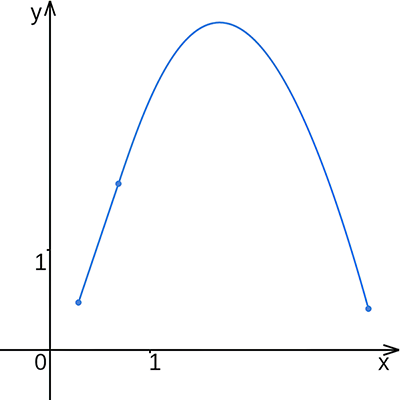
Use the figure to compare a continuous, smooth parametric curve assembled from linear and quadratic pieces. section 5.2.2

