liveBook · Manning

Pass-through design-time coupling

As explained in Microservices Patterns, Second Edition

A dependency caused when intermediate services must carry data that their own business logic does not use.

Pass-through design-time coupling occurs when a service must carry data that its own business logic does not use. Changes to that data can therefore require changes to intermediate services. section 10.1.3

Create Order Saga

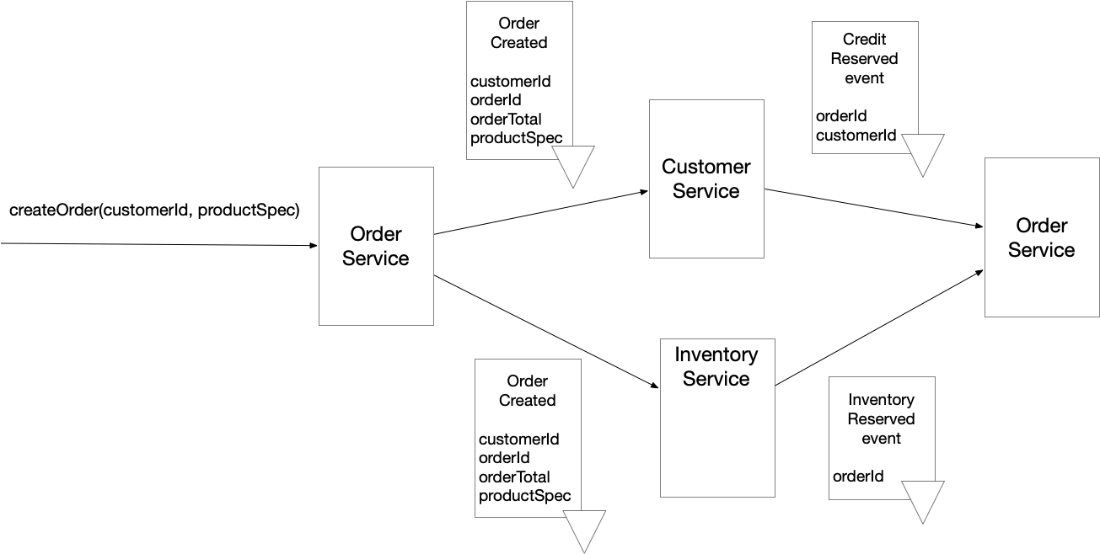
In a sequential choreography, Order Service sends productSpecification through Customer Service to Inventory Service. Customer Service carries the data without using it. Fan-out choreography can instead trigger both services directly, avoiding that pass-through, though coordination becomes more complicated. section 10.1.3

Figure 10.6 A version of the Create Order Saga that uses fan-out publish/subscribe. The Order Created event triggers both the Customer Service and the Inventory Service, which eliminates pass-through coupling in the Customer Service. The productSpecification is passed directly from the Order Service to the Inventory Service.
events transport data with inventory fanout happy

Shows Order Created triggering Customer Service and Inventory Service directly, so productSpecification bypasses Customer Service. section 10.1.3

How Microservices Patterns, Second Edition covers it

How deep it goes
Defines the coupling, traces it through a Create Order flow, and contrasts fan-out choreography as a mitigation.
Examples
Uses productSpecification passed through Customer Service from Order Service to Inventory Service.
What it assumes
Assumes familiarity with choreography-based sagas and event flows, without defining those foundations.
What you can do after
Diagnose unnecessary coupling by tracing which services carry event data they do not use.
How it connects
Connects saga choreography, events, and publish/subscribe.

Related concepts

This explainer was generated by Manning's knowledge graph from the text of Microservices Patterns, Second Edition. The section links point to the parts of the book it draws on.