Pattern matching reproduces regularities in data without necessarily representing what they mean. In language systems, scripted rules can produce replies that seem responsive, even when the system has no model of the situations being discussed. section 1.5.1
This approach works within familiar patterns but falters when inputs fall outside them. Translation illustrates the limitation: matching surface forms cannot reliably resolve whether “bank” refers to money or a riverbank without context. section 2.2.2
Figure 2.1 Example interaction with ELIZA. The system produces plausible responses when user input matches expected conversational patterns, but its behavior is driven by scripted rules combining keywords, pattern matching, and response templates rather than an understanding of meaning. As the dialogue progresses, this limitation becomes visible when responses no longer align with the user’s intent.
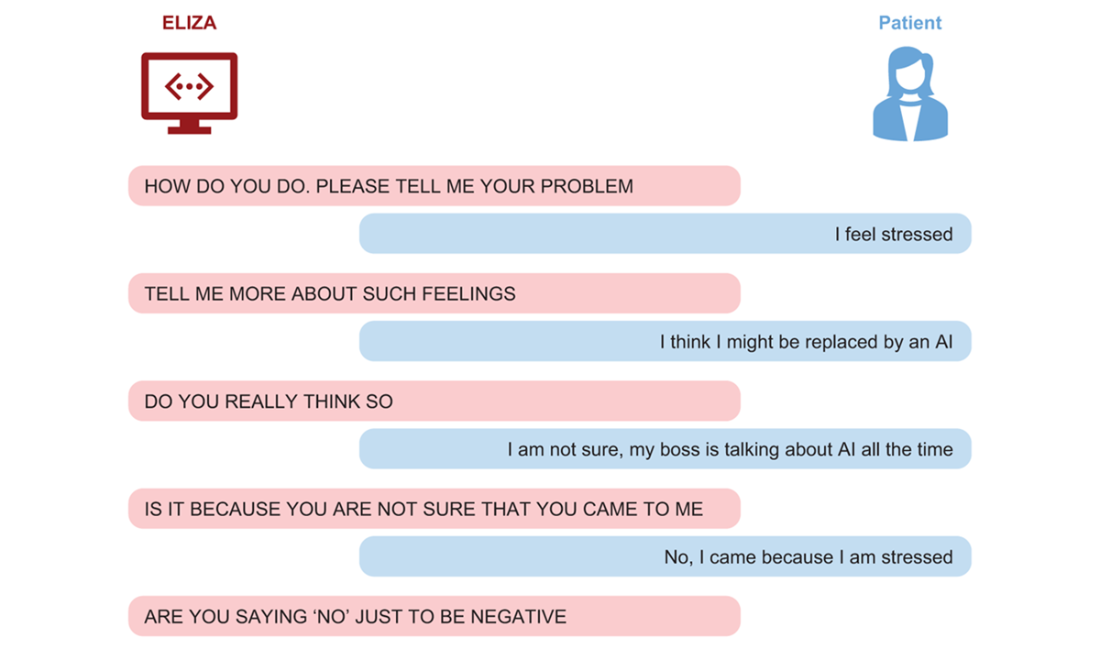
The ELIZA interaction shows how scripted patterns can produce plausible replies, then lose alignment with a user’s intent. section 2.2.2