A security profile maps an API’s resources and operations to the access controls they require. It makes security expectations visible before implementation and identifies where authorization needs extra care. section 3.2
In FAPI 2.0, the security profile defines baseline requirements for issuing access tokens and using them to reach sensitive data. It constrains clients, authorization servers, and resource servers to strengthen authentication and authorization. section 10.2 section 10.4
E-commerce access rules
An unauthenticated visitor may browse a product catalog, but only authenticated users may upload products, and only listing owners may update or delete them. Turn these rules into access-control tests that verify the implementation. section 3.2
Use a security profile to check:
- Which users or clients may perform each operation. section 3.2
- Whether controls cover all data flows and sensitive resources. section 3.2
- Whether tests reject access to another user’s account or data. section 10.4
Figure 3.10 On an e-commerce platform, an unauthenticated user can browse the catalog but can’t upload new products or change their details.
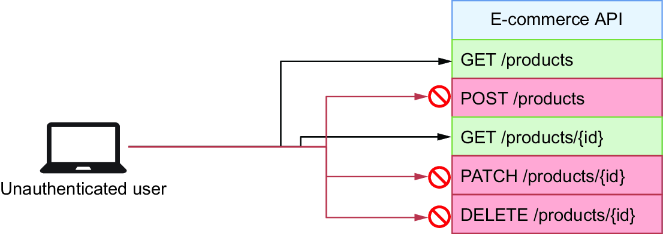
Use the access matrix to compare public catalog access with authenticated product creation and owner-only changes. section 3.2
