A personal attack directs criticism at the developer instead of the code. In code reviews, replace judgments about a person with specific discussion of technical properties, team guidelines, or the requested change. section 6.2
Make review comments less personal by choosing language that keeps attention on the work:
- Avoid direct accusations such as “You don’t care to be a part of the project.” section 6.2
From personal criticism to technical feedback
“You should move the Vehicle class” centers the recipient. “Can we move the Vehicle class to a separate file? This follows our team guidelines and will improve readability” centers the change and its rationale.
Figure 6.7 Nontoxic comment unigram breakdown. Technical terms, like “tests,” “files,” or “pull request” are statistically more likely to be found in comments labeled nontoxic.
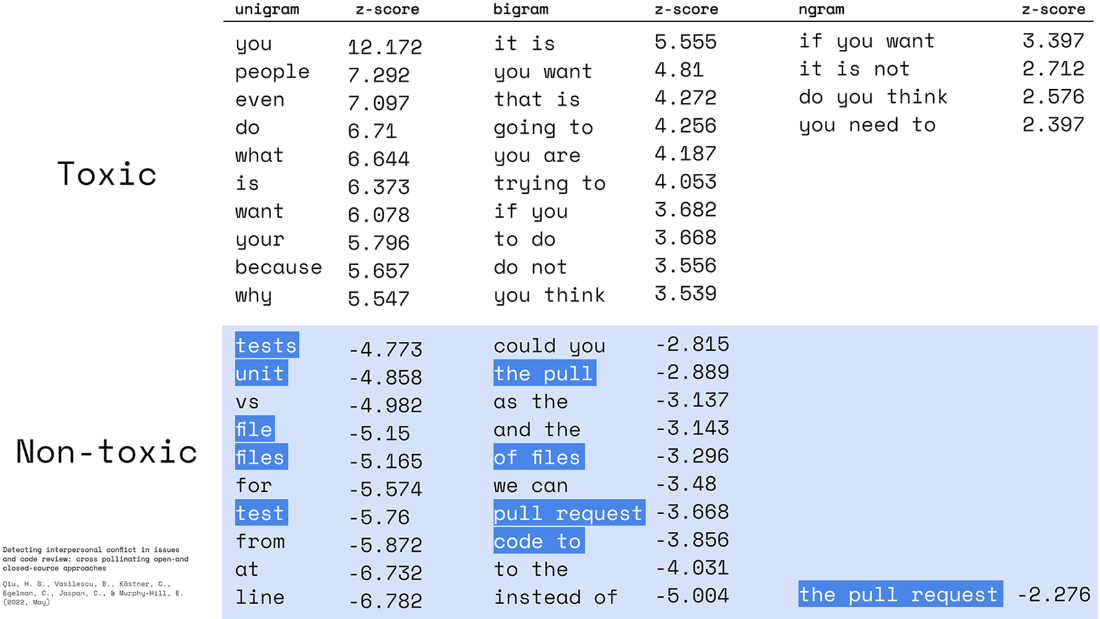
Compare technical terms associated with nontoxic comments against person-directed language associated with toxic comments. section 6.2
