liveBook · Manning

Monolithic script

As explained in Learn PowerShell Scripting in a Month of Lunches, Second Edition: Write and organize scripts and tools

A monolithic script is a single script that combines many distinct operational responsibilities and functionality.

A monolithic script combines several operational responsibilities into one sequential workflow instead of separating them into modular tools. Its many branches and in-memory interactions make testing and debugging harder. section 8.2 section 17.2.2

Break the script into small, self-contained tools that each represent a clear boundary:

From onboarding workflow to separate tools

An onboarding script that reads HR data, creates login names, checks directory availability, creates accounts, provisions mailboxes, and adds SharePoint groups should become four separate scripts rather than one 100-plus-line sequence. section 8.2
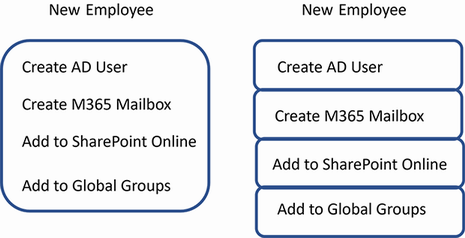
Figure 8.1 Breaking out a script into multiple parts

Use the decomposition diagram to compare a single workflow with its separated tools. section 8.2

How Learn PowerShell Scripting in a Month of Lunches, Second Edition: Write and organize scripts and tools covers it

How deep it goes
Defines the failure pattern and demonstrates functional decomposition, but does not develop a complete refactoring procedure.
Examples
Uses employee onboarding and password-expiration notification workflows as examples of decomposition.
What it assumes
Assumes basic scripting familiarity and teaches responsibility boundaries through concrete automation workflows.
What you can do after
Build smaller reusable functions, test them separately, and debug automation with fewer interacting responsibilities.
How it connects
Connects monolithic scripts with modularization, automated unit testing, debugging, reusable tools, and independently testable logging.

Related concepts

This explainer was generated by Manning's knowledge graph from the text of Learn PowerShell Scripting in a Month of Lunches, Second Edition: Write and organize scripts and tools. The section links point to the parts of the book it draws on.