A mnemonic is a memory aid that makes difficult information easier to recall. It can use a catchy phrase, rhyme, acronym, image, or other cue. section 4.1
Mnemonics support learning developer skills by turning programming terms, syntax, algorithms, data structures, and lists into memorable prompts. section 4.1.2
Useful mnemonic approaches include:
- Acronyms form a word from the first letters of a phrase, such as SOLID for five software design principles. section 4.1.2
- Acrostics use a sentence whose initial letters represent another word or phrase, such as “Careful Reading Uncovers Deeper Meaning” for CRUD. section 4.1.2
- Chunking divides large amounts of information into smaller groups, such as a function or related variables in a long code string. section 4.1.2
- Imagery associates information with a mental picture, such as a tree representing a program’s hierarchy. section 4.1.2
Using a mnemonic while learning
When a programming concept feels difficult to visualize, create a mental image for it or reduce its parts to a short acronym. Combine the cue with active recall by testing yourself or teaching the idea to someone else. section 4.1.2
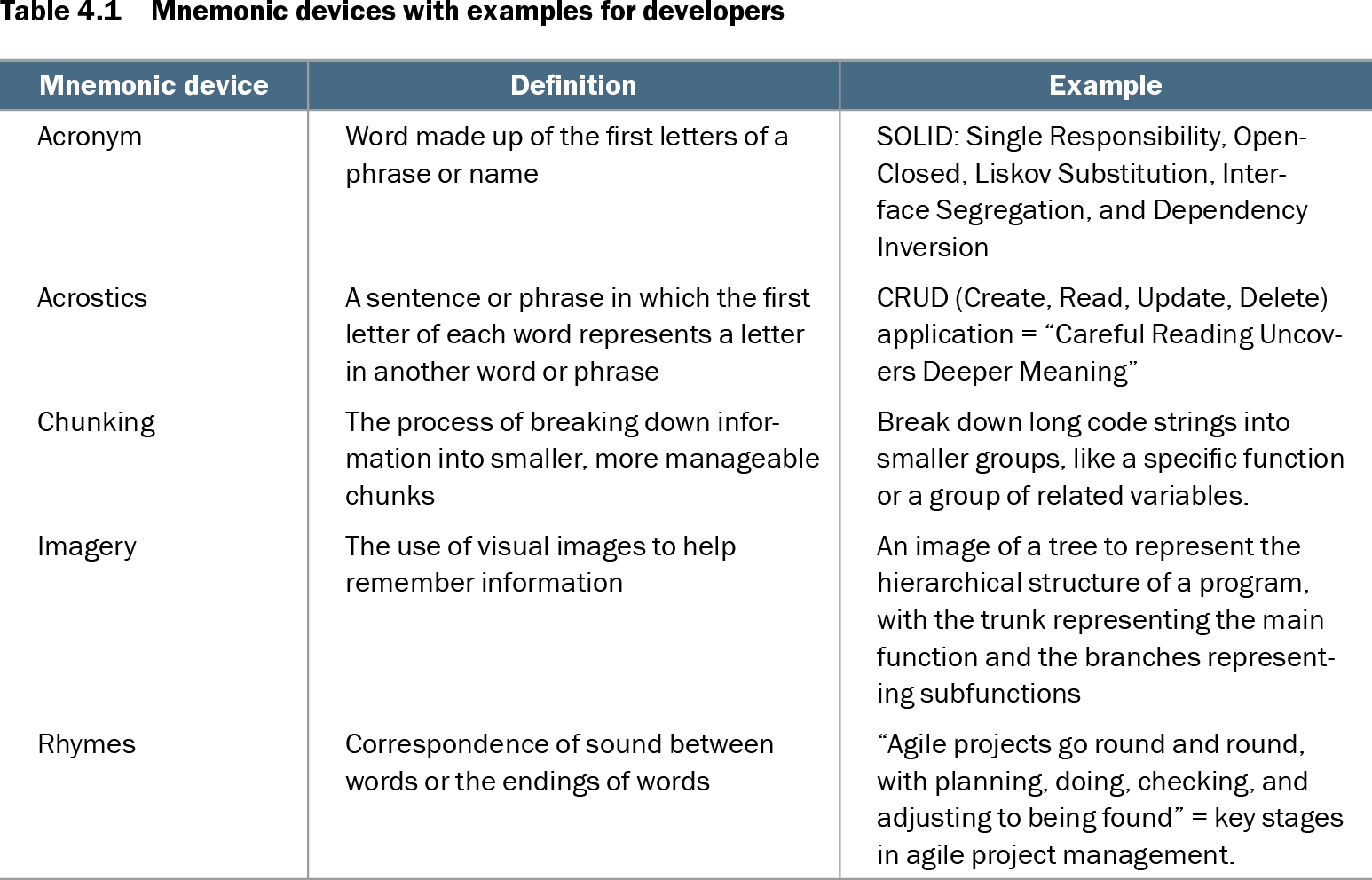
Table 4.1 Mnemonic devices with examples for developers (view table figure)
| Mnemonic device |
Definition |
Example |
|---|---|---|
| Acronym |
Word made up of the first letters of a phrase or name |
SOLID: Single Responsibility, Open-Closed, Liskov Substitution, Interface Segregation, and Dependency Inversion |
| Acrostics |
A sentence or phrase in which the first letter of each word represents a letter in another word or phrase |
CRUD (Create, Read, Update, Delete) application = “Careful Reading Uncovers Deeper Meaning” |
| Chunking |
The process of breaking down information into smaller, more manageable chunks |
Break down long code strings into smaller groups, like a specific function or a group of related variables. |
| Imagery |
The use of visual images to help remember information |
An image of a tree to represent the hierarchical structure of a program, with the trunk representing the main function and the branches representing subfunctions |
| Rhymes |
Correspondence of sound between words or the endings of words |
“Agile projects go round and round, with planning, doing, checking, and adjusting to being found” = key stages in agile project management. |
Compare mnemonic types with their definitions and developer-focused examples. section 4.1.2