A photograph of a plain gray card can look smooth—until it is enlarged. Photographic film is a gel holding particles of silver compounds. Light exposure makes tiny crystal-structure changes that form an invisible image. section 8.2
Development turns each particle into a stark choice: converted silver appears black, while an unconverted particle appears white. Grays can emerge during analogue enlargement from negative to paper, but enough magnification reveals the separate particles as film grain. section 8.2
Figure 8.13 Film grain (courtesy of Keith Cooper)
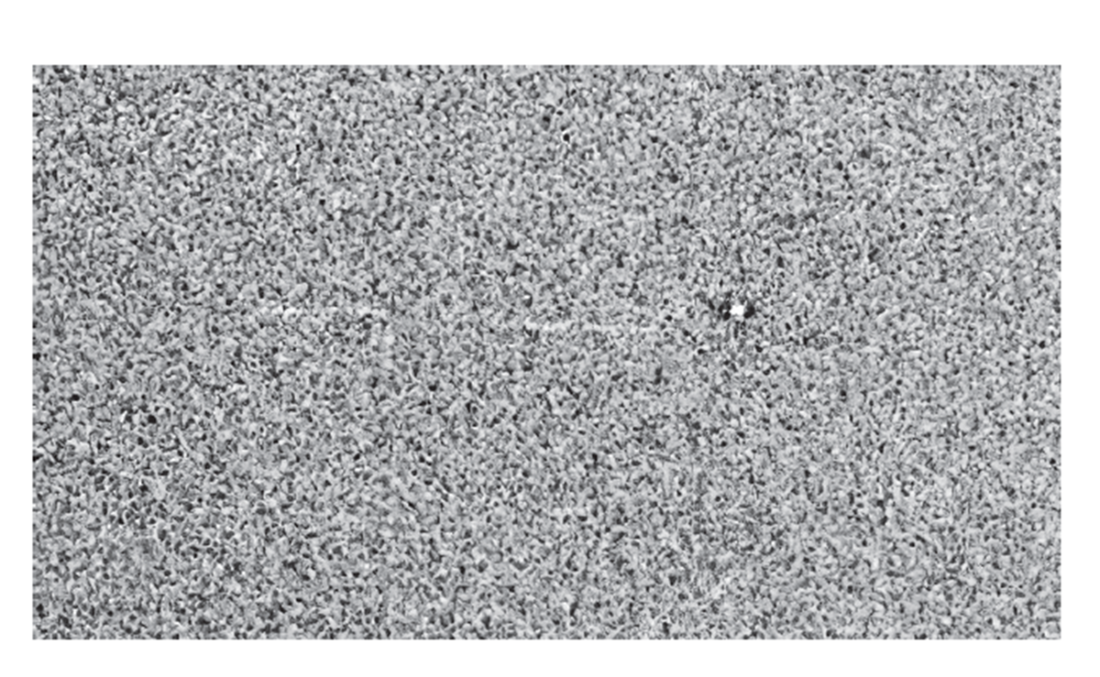
An enlargement of a gray card makes the grain behind an apparently continuous gray visible. section 8.2
Figure 8.14 Film under an electron microscope.(Photo courtesy of University of Rochester)
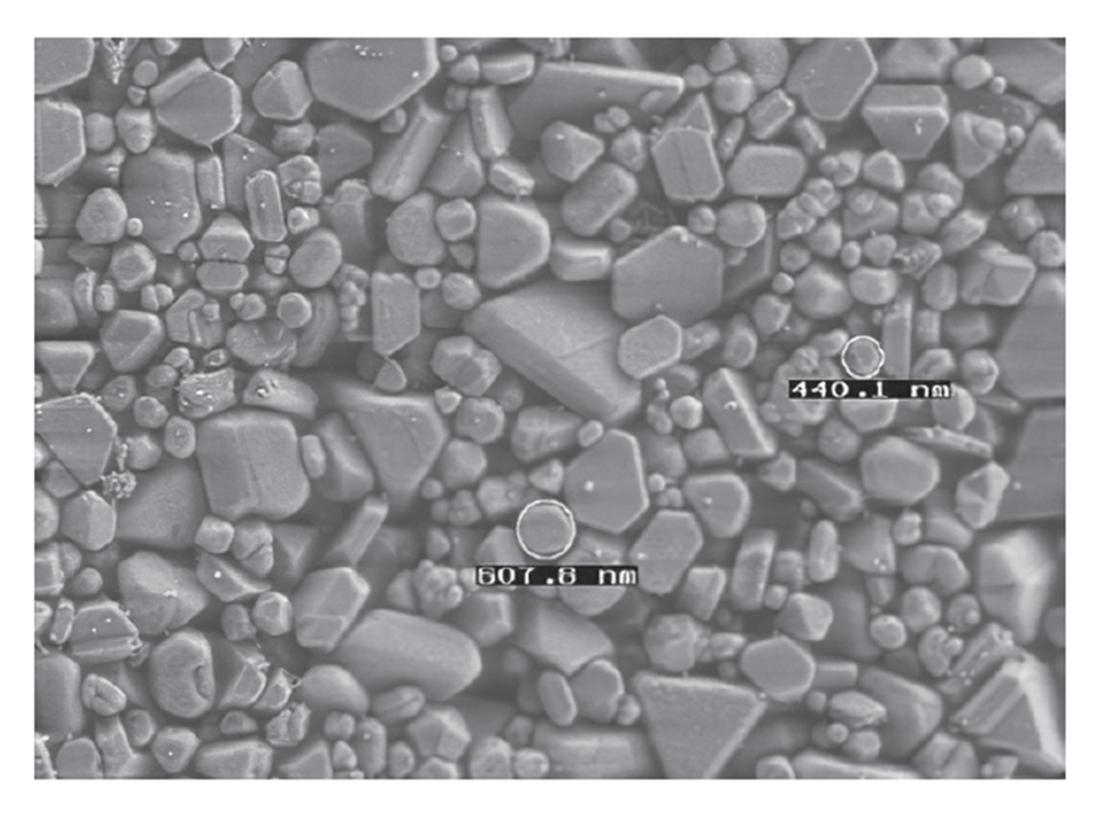
An electron-microscope view exposes the individual crystals that make up the film. section 8.2
Film therefore supplies a gray-tone negative, not a directly printable image. When printing permits only black and white, those gray tones can be converted into regularly spaced halftone dots whose diameters represent the level of gray. section 8.2