A physical unclonable function lets a chip create a device-specific key from uncontrollable physical variations in its hardware. Unlike one secret hardcoded across every device, each chip receives its own identity, limiting the damage from a single compromise. section 13.2.4
A typical secure-device arrangement uses the function to:
- Create a unique hardware key, alongside alternatives such as a key fused during manufacturing. section 13.2.4
- Combine that key with a user PIN through password-based key derivation to protect a data-encryption key. section 13.2.4
- Support hardware identities such as an Apple Secure Enclave UID or a TPM endorsement and attestation key. section 13.2.4
Why per-device keys matter
Hardcoding one secret into thousands of chips means compromising one device can compromise them all, as illustrated by the DUHK attack. Per-device secrets avoid that shared-secret failure. section 13.2.4
Figure 13.3 A chip implementing the TPM 2.0 standard, plugged into a motherboard. This chip can be called by the system’s motherboard components as well as user applications running on the computer’s OS. Photo from Wikipedia (http://mng.bz/Q2je).
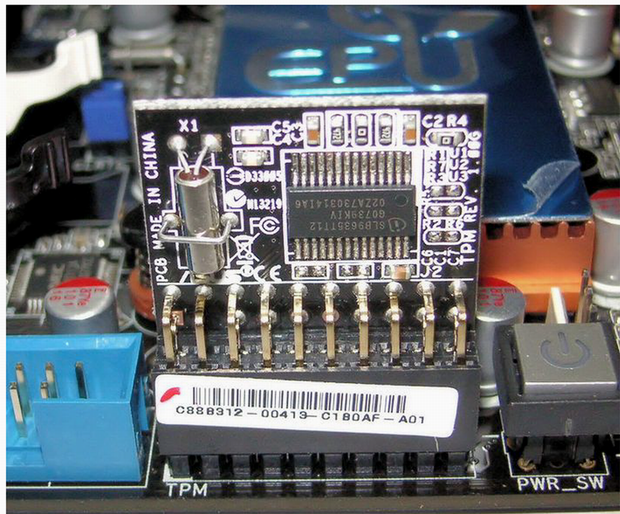
A TPM chip provides the hardware setting in which per-device identities and secure-boot trust mechanisms operate. section 13.2.4
