Plaintext is data in its original readable form before encryption or another transformation. It may be text, an image, a video, or anything representable as bits. Encryption transforms plaintext into ciphertext; decryption restores it. section 4.1
Plaintext appears at several points in a cryptographic process:
- Alice starts with a message such as “hello,” encrypts the plaintext with a secret key, and sends ciphertext to Bob. section 4.1
- AES accepts exactly 128 bits of plaintext and produces 128 bits of ciphertext; its reversible mapping depends on the key. section 4.2.2
- A server that stores passwords in cleartext exposes the original passwords if its database is breached. section 11.2
Readable before protection
The word “hello” is plaintext while Alice is preparing it. After encryption it becomes ciphertext that should look random to observers; Bob decrypts it back into the original plaintext. section 4.1
Figure 4.1 Alice (top right) encrypts the plaintext hello with the key 0x8866... (an abbreviated hexadecimal). Then Alice sends the ciphertext to Bob. Bob (bottom right) decrypts the received ciphertext by using the same key and a decryption algorithm.
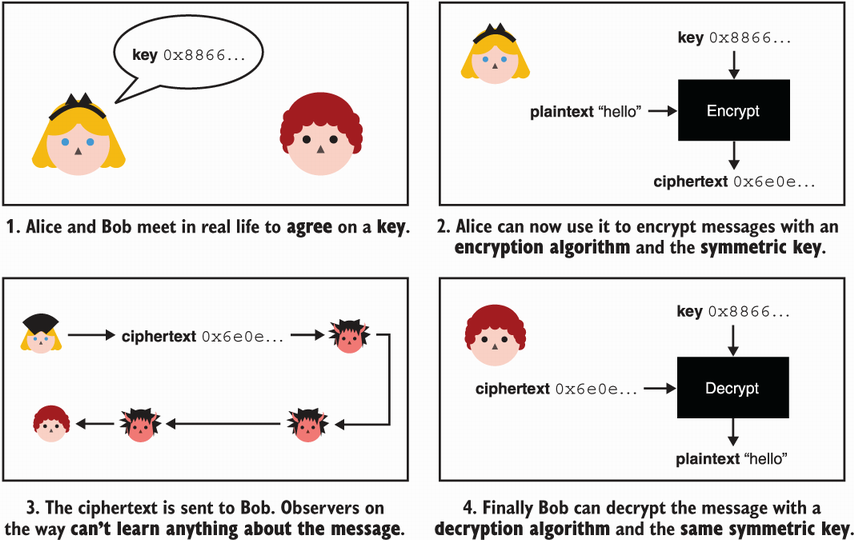
Follow the message path from plaintext to ciphertext and back again using the same symmetric key. section 4.1
