Platform as a product applies modern product-management practices to internal developer platforms. It treats employees as customers and prioritizes customer value, usability, lower cognitive load, and improved productivity over building a complete platform upfront. section 13.4.1 section 6.1.4
A product-oriented platform approach:
- Starts with a clear strategy and business case rather than fashion or imitation. section 13.4.1
- Connects platform investment to productivity, innovation, collaboration, scalability, and reduced cognitive load—not cost reduction alone. section 13.4.1
- Develops iteratively through feedback, proofs of concept, and minimum viable products, scaling investment as value is validated. section 13.4.1
- Avoids treating the platform as a large, fully specified, multiyear project whose users are expected to appear after delivery. section 13.4.1 section 6.1.4
NAV’s internal platform
NAV developed its platform on an as-needed basis rather than specifying and delivering it as a three-year project. Treating employees as customers, it sought to make the platform attractive by reducing cognitive load and helping people work more effectively. section 6.1.4
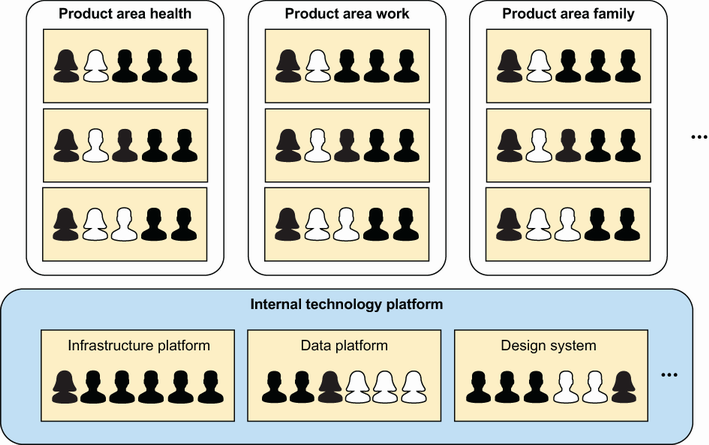
Use the internal technology platform figure to inspect the platform context behind the employee-as-customer approach. section 6.1.4
