Platform engineering designs and operates internal capabilities that help development teams deliver software efficiently. The platform team treats developers as internal customers: it selects and integrates tools, defines useful workflows, and automates the path from a code change to production. The aim is not to make every developer learn the tools and glue code behind that path. section 1.0 section 1.3 section 1.2.1
A practical platform takes shape through a sequence of decisions:
- Identify the workflows application teams need, then agree on a clear contract for what the platform provides. Expose that contract through APIs usable by automation, a dashboard, or other tools. section 1.2.1 section 9.5
- Select and integrate existing tools where they fit. Weigh glue code, extensions, and tailored implementations against the cost of maintaining custom tools. section 1.2.1 section 9.5
- Create a golden path that validates changes and moves them toward production. Automate the work after a developer makes a change, rather than leaving each team to assemble its own delivery process. section 1.3 section 2.5
- Measure whether new capabilities actually improve the experience, and revisit decisions as teams’ needs and available tools change. section 1.4.3 section 9.5
On Kubernetes, a platform can expose Kubernetes-style declarative APIs, an organization-specific API, or both. Reusing Kubernetes APIs gives compatible cloud-native tools an integration point; an additional API layer can follow company standards. How much Kubernetes detail developers should see is a design choice, not a requirement that every team work directly with Kubernetes. section 6.2 section 1.2.1
Walking-skeleton delivery path
Run a small, multi-service Conference application in a Kubernetes cluster and install it with Helm. Then trace the work needed to build service artifacts, promote versions through environments, and handle runtime failures. This exposes where the platform needs pipelines, safe working environments, and higher-level capabilities rather than another disconnected tool. section 1.0 section 1.4.3 section 2.5
Figure 6.7 Kubernetes-based platform APIs complemented by company-specific APIs
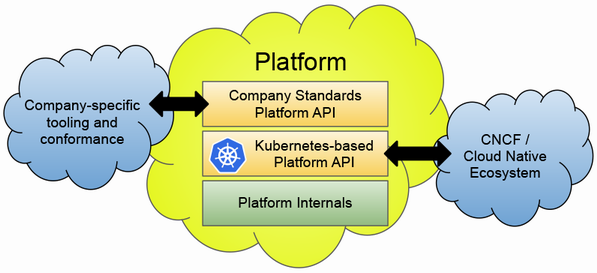
Compare a Kubernetes-based platform API with a complementary company-specific API layer; the two approaches need not be exclusive. section 6.2

