A platform product manager guides the evolution of an internal engineering platform by connecting developer needs, technical delivery, and business objectives. The role treats the platform as a product: it investigates users, sets priorities, aligns stakeholders, and measures whether the platform creates tangible value. section 10.2.4 section 10.2.5
Core responsibilities include:
- Research developer workflows, pain points, and requirements through interviews, surveys, and observation. section 10.2.4
- Engage leadership, development teams, and operations to reconcile technical needs with organizational objectives. section 10.2.4
- Turn user feedback and strategic goals into a communicated roadmap that balances immediate delivery with long-term maintainability. section 10.2.5
- Deliver capabilities incrementally, validate assumptions through usage, and adapt based on developer feedback. section 10.2.5
- Track adoption rate, time-to-onboard, and satisfaction scores to identify gaps and demonstrate value. section 10.2.5
LaunchPad internal developer platform
Epetech’s LaunchPad used standardized service templates, integrated CI/CD pipelines, and a user-friendly portal. The product manager’s priorities connected these capabilities to reduced setup friction, autonomous developer action, consistency, compliance, reliability, and measurable adoption. section 10.2.5
Figure 10.4 Visual representation of the lifecycle of the platform-as-a-product approach, highlighting how to transition from vision and mission to a fully operational, developer-centric platform
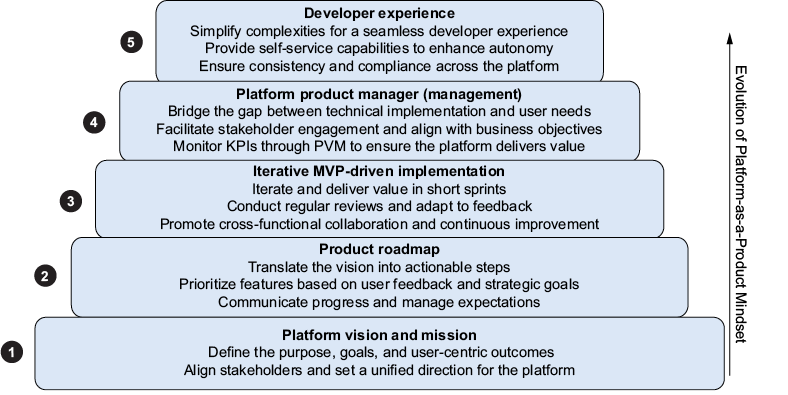
Use the lifecycle figure to connect platform vision and mission with roadmap decisions, iterative delivery, and a developer-centric operational platform. section 10.2.5

