Platform usage is the observed extent and manner in which users or teams use an engineering platform and its capabilities. It reveals both adoption and the difference between intended and actual use, making it a source of product ideas and improvement opportunities. section 2.3.2
Measure platform usage through complementary signals:
- Track the teams and developers using the platform, including adoption of golden paths and active daily or weekly users. section 10.1.1
- Track migration timelines by including a repeatable exercise that moves a demo program from Git creation to production. section 3.4.1
- Compare stated feature usage with observed behavior, and combine adoption data with productivity, quality, reliability, observability, and autonomy measures. section 2.3.2 section 10.1.1
Using adoption data to find friction
If teams take longer than expected to move a demo program from Git to production, the adoption rate and migration timeline expose possible onboarding or platform-usage problems. The platform team can use those signals when qualifying improvements. section 3.4.1 section 2.3.2
Figure 10.1 Quantifying the value across multiple levels, from building the capabilities to addressing the business outcomes
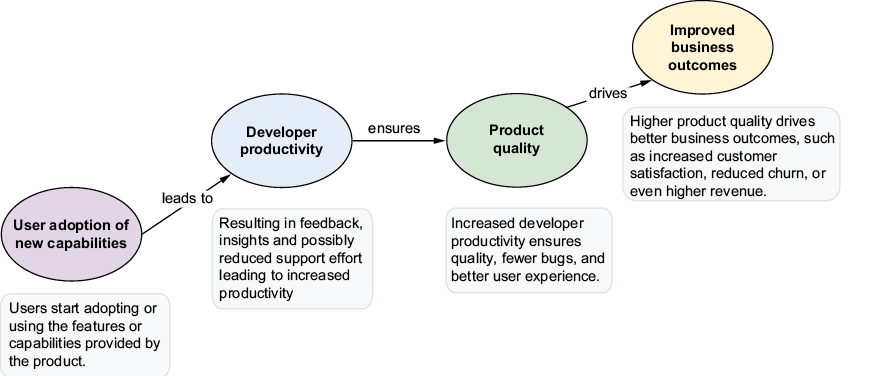
Use the value model to connect usage and platform capabilities with developer, operational, and business outcomes. section 10.1.1
