liveBook · Manning

Policy principle

As explained in Data-Driven Cybersecurity

The policy principle is the control-rating dimension representing high-level strategic direction, purpose, and scope.

Policy is the control-rating dimension for high-level strategic direction and principles that define an organization’s cybersecurity purpose and scope—the why. section 1.5.1

Within HITRUST control assessment, policy works alongside five rating principles:

  • Procedure translates policy into detailed implementation instructions. section 1.5.1
  • Implemented records the actual application or execution of policies and procedures. section 1.5.1
  • Measured assesses control effectiveness continuously, while Managed supports ongoing updates based on measurements. section 1.5.1
Figure 1.2 HITRUST scoring criterion by percentage. The percentages indicate the weights placed on each category for scoring purposes.
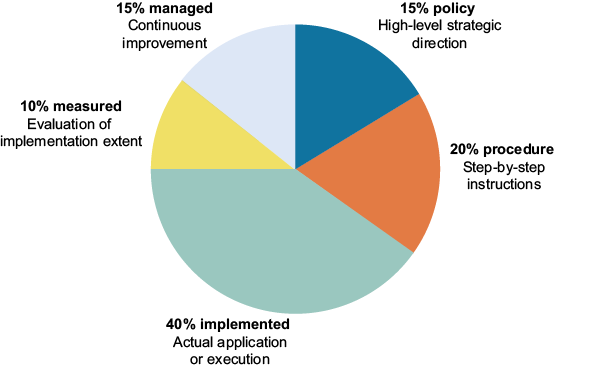
The HITRUST scoring criterion shows how assessment weights assigned to policy and related principles contribute to control and certification scores. section 1.5.1

How Data-Driven Cybersecurity covers it

How deep it goes
Defines policy and contrasts it with four related principles, but does not provide drafting steps or policy examples.
Examples
Uses HITRUST control statements, certification assessment, and weighted scoring categories as concrete artifacts.
What you can do after
Evaluate the strategic-direction component of a cybersecurity control assessment and distinguish it from execution and measurement.
How it connects
Connects policy with procedure, implemented, measured, managed, cybersecurity controls, and HITRUST certification.

Related concepts

This explainer was generated by Manning's knowledge graph from the text of Data-Driven Cybersecurity. The section links point to the parts of the book it draws on.