liveBook · Manning

Polite standard

As explained in Real-World Cryptography

A cryptographic standard designed to address edge cases and security issues while providing safe interfaces and practical implementation guidance.

A polite standard makes cryptography safer to use in the real world. It anticipates edge cases and security problems, provides interfaces that reduce misuse, explains implementation and usage, and supplies test vectors for checking correctness. section 16.2

A well-behaved standard should:

  • Leave little room for implementers to make dangerous mistakes. section 16.2
  • Cover edge cases and potential security issues instead of assuming ideal inputs. section 16.2
  • Include matching input-output test vectors for implementation testing. section 16.2
  • Balance cryptographic agility against added complexity and downgrade risks. section 16.2
Figure 16.1 The Tamarin protocol prover is a free formal verification tool that you can use to model a cryptographic protocol and find attacks on it.
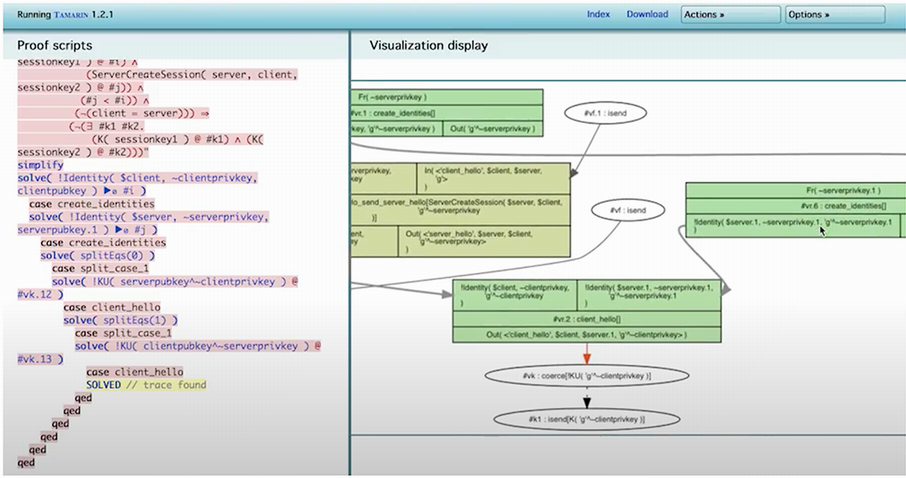
Formal verification can model a cryptographic protocol and search for attacks, complementing careful standard design. section 16.2

How Real-World Cryptography covers it

How deep it goes
Explains interfaces, edge cases, guidance, test vectors, and agility tradeoffs.
Examples
Uses test vectors, cryptographic agility, TLS downgrade attacks, and Tamarin protocol modeling as concrete reference points.
What you can do after
Evaluate standards for safe interfaces, edge-case coverage, implementation guidance, and test vectors.
How it connects
Connects cryptographic primitives, protocols, test vectors, cryptographic agility, downgrade attacks, and formal verification.

Related concepts

This explainer was generated by Manning's knowledge graph from the text of Real-World Cryptography. The section links point to the parts of the book it draws on.