In multifidelity optimization, the posterior mean maximizer is the input with the highest predicted objective value under the current Gaussian-process belief. It answers: if optimization stopped now, which point should be recommended? section 9.4
Use the posterior mean maximizer to:
- Measure progress when the high-fidelity incumbent is unavailable or misleading. section 9.4
- Distinguish optimization scenarios by evaluating the objective at the current best posterior-mean location. section 9.4
- Implement the recommendation by optimizing a high-fidelity posterior-mean acquisition function. section 9.4
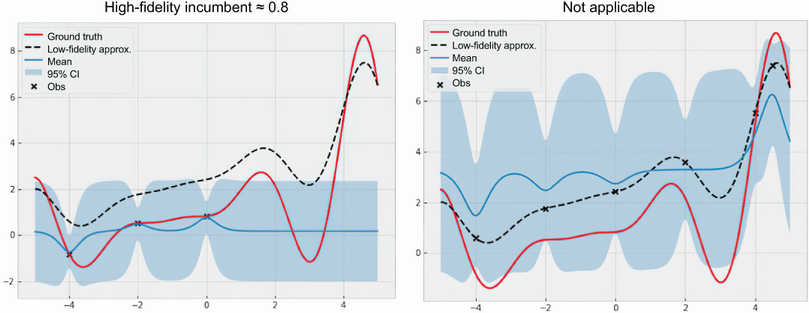
Figure 9.13 Measuring performance with the high-fidelity incumbent is inappropriate in multifidelity optimization. On the left, the high-fidelity incumbent is roughly 0.8, while we haven’t discovered the objective’s optimum. On the right, even though we are close to locating the objective’s optimum, there’s no high-fidelity query to record the incumbent value with.
Compare why high-fidelity incumbent values can misrepresent progress and why posterior-mean recommendations provide a more useful metric. section 9.4
