A pot is the shared pool of chips accumulated during a game. In Bogart, it begins empty, grows during a turn, and is either awarded to the player or lost. section 10.4.1
A turn changes the pot in a small sequence:
- Add one chip before the first die roll. section 10.4.1
- Add two chips before rolling two dice, then three, four, and five chips as play continues. section 10.4.1
- Award every chip when the player stops voluntarily, then reset the pot to zero. section 10.4.1 section 10.4.2
- Leave the pot uncollected when a player rolls a 1 and the turn ends. section 10.4.1
A Bogart turn
A player starts with an empty pot. One chip is added before the first roll. If the player continues, more chips enter the pot with each sequential roll. Stopping transfers the accumulated chips to that player; rolling a 1 ends the turn without a payout. section 10.4.1
Figure 10.5 Player turn in Bogart
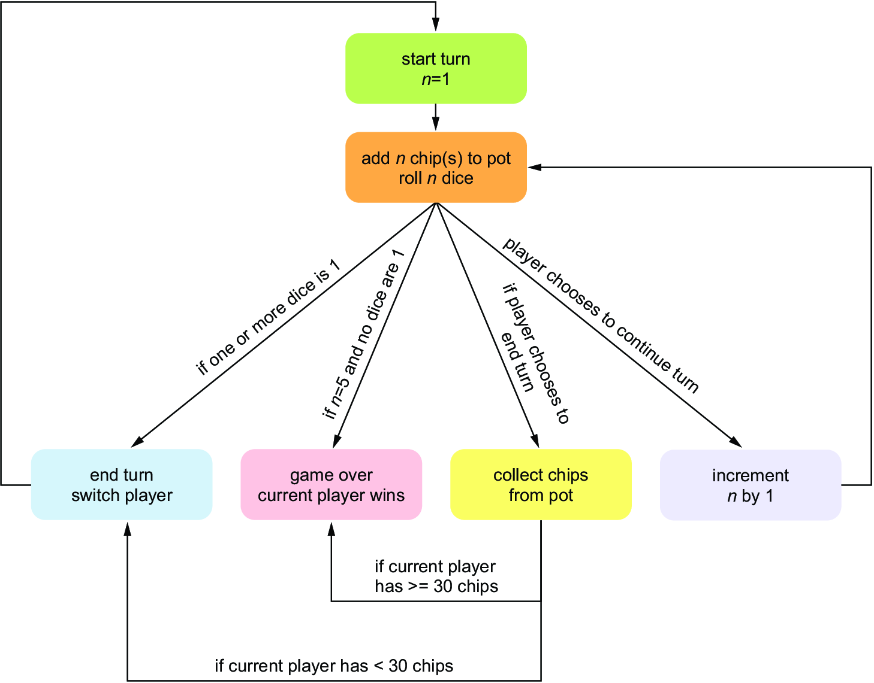
Follow the player-turn flow to see when the pot grows, pays out, or remains unclaimed. section 10.4.1
