Precision of language deliberately uses analytical terms so stakeholders interpret findings according to the research design, methodology, and evidence rather than conversational assumptions. section 2.2.1
Apply precision of language by distinguishing terms that imply different levels of evidence:
- Use cause, associate, predict, suggest, difference, and findings according to their analytical meanings rather than treating them as interchangeable. section 2.2.1
- State the scope of interpretation: clarify how far results can be generalized and what null or alternative findings support. section 2.2.1
- Use precise wording in deliverables to reduce conflation, guide follow-up questions, manage expectations, and support appropriate action. section 2.2.1
Help Center visits and chat volume
A team’s analysis of Help Center visits and chat volume was later interpreted as evidence that search optimization would cause further reductions in support volume. Precision of language would keep that causal claim within the findings’ warranted scope. section 2.2.1
A slide such as this delineates the scope of interpretation and helps ensure the long-term success of your work.
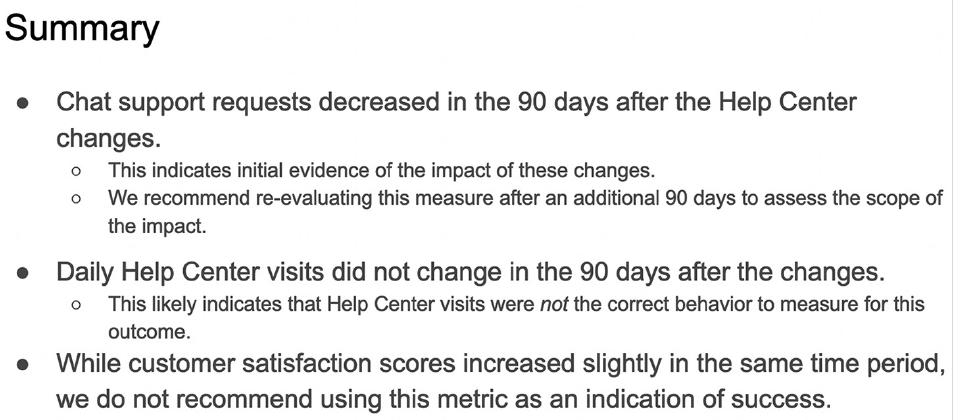
Use the scope-of-interpretation slide to make the boundaries of findings visible in stakeholder deliverables. section 2.2.1
