Preparation is the incident-response phase that builds readiness before a security incident occurs. It strengthens defenses, establishes procedures, and trains the people who will respond. section 5.3.1
Preparation matters because strong defenses alone are not enough. An organization also needs a coordinated, repeatable way to act quickly when pressure is high and uncertainty is greatest. section 5.3.1
Core preparation activities include:
- Strengthen physical infrastructure, networks, host systems, and email security; continue security awareness training to reduce phishing and malware risk. section 5.3.1
- Develop an incident response plan with playbooks containing predefined steps, roles, and decisions for detection, analysis, containment, eradication, and recovery. section 5.3.1
- Identify an incident response team, define its chain of command, and assign responsibilities for communication, analysis, containment, and mitigation. section 5.3.1
Preparation connects to the other lifecycle phases. Post-incident lessons feed back into procedures and training, while recovery activities can improve monitoring and incident classification. section 5.3
Figure 5.1 Illustration of the incident response life-cycle.
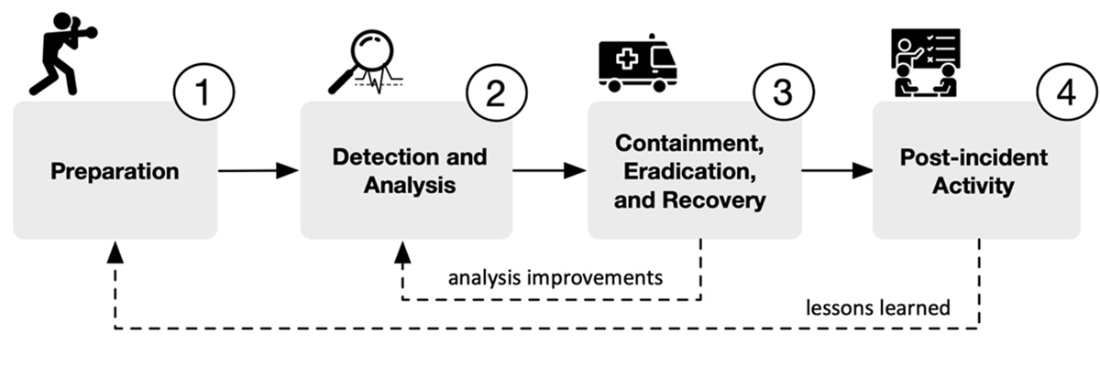
Use the lifecycle diagram to see preparation as the starting point of a continuous cycle linking detection, response, recovery, and learning. section 5.3