A priority queue retrieves work by importance instead of insertion order. In an asynchronous data pipeline, it lets workers process a mission-critical update before an earlier, long-running query. section 12.2 section 12.0
Python’s asyncio.PriorityQueue uses a heap. The smallest item appears first, so tuple work items conventionally place an integer priority first: lower numbers mean higher priority. section 12.2
Represent queued work in one of these practical ways:
- Use tuples such as (1, 'High priority') when a simple priority rule is enough. section 12.2
- Use an ordered dataclass when payload fields should not participate in priority comparison. section 12.2
- Add a sequence number to break equal-priority ties predictably; otherwise tied items can be processed in an unexpected order. section 12.2
Prioritizing web orders
An order-processing service can assign power-user orders priority 1 and normal-user orders priority 2. Background workers then handle higher-priority orders first while the web endpoint responds quickly. section 12.2 section 12.0
Figure 12.1 On the left, a binary tree that satisfies the heap property; on the right, a binary search tree that does not satisfy the heap property
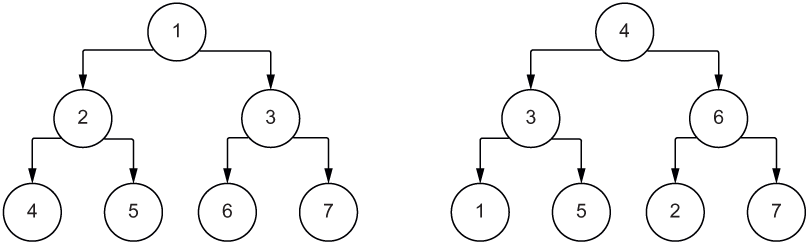
Compare the heap property with a binary search tree to see why the queue can identify its smallest, highest-priority item. section 12.2




