private_key_jwt authenticates a confidential client by having it sign a new, one-time-use JWT with a private key previously registered with the authorization server. The client sends that assertion when requesting tokens. section 10.4
Figure 10.6 Public clients run in the user agent, and their code is exposed, so they can’t store credentials to authenticate with the authorization server. Confidential clients run on a server, and their code isn’t exposed, so they can store credentials with which they authenticate with the authorization server.
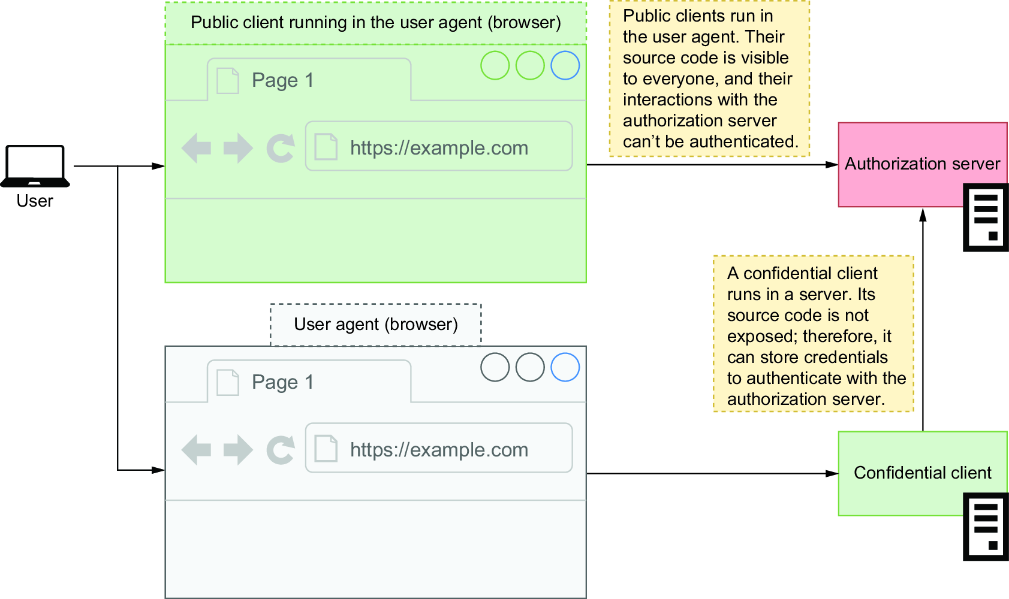
Use the public-versus-confidential-client distinction to see why private_key_jwt belongs on a server that can protect private credentials, not in exposed browser code. section 10.4
Token request
A form-encoded token request can contain grant_type=authorization_code, the authorization code, client_id, client_assertion_type=urn:ietf:params:oauth:client-assertion-type:jwt-bearer, and client_assertion=<self-signed-jwt>. The assertion is freshly signed for that request and proves control of the registered key. section 10.4
