Product intent explains why a software product exists: who it serves, which problem it solves, which alternative it challenges, and what position it takes. Finding that intent gives unfamiliar code a purpose before implementation details obscure it. section 5.2 section 1.5
Reverse-engineer product intent by asking:
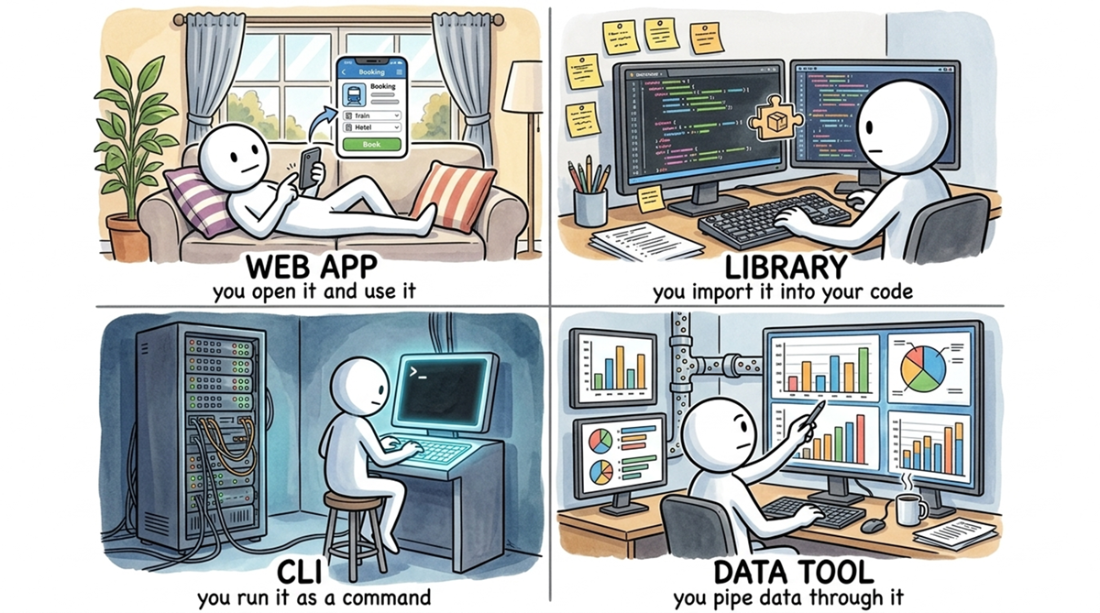
- Who uses the repository, and what action do they take: open, import, run, or pipe? section 5.2
- What pain does it remove, and which incumbent or alternative does it challenge? section 5.2
- Where does intent hide: the UI and schema, public API and README, commands and defaults, or connected sources? section 5.2
A date library makes a product bet
A date library targets developers whose timezone problems are painful enough to replace the language's standard library. Cal.com similarly competes with Calendly, though its customer and pain differ from those of a reusable package. section 5.2
Figure 5.3 You open a web app, import a library, run a CLI, or pipe data through a tool. Each interface reveals the specific customer the codebase is built to win.
Compare delivery models with their customers, pains, intent locations, and rivals. section 5.2
