A product specialist defines what needs to be built, for whom, and why. In specification work, this is the Discover phase: architects define the technical approach, and engineers break the work into executable tasks and completion evidence. Feedback from implementation and testing can refine the specification, including unclear acceptance criteria. section 4.1.1
Feature work can also establish standing context for future specifications:
- Record business rules that apply across the product, not just to one feature. section 4.2.1
- Define shared business vocabulary so specifications can use precise, consistent terms. section 4.2.1
- Make authors consider who a capability serves, how failures appear to users, and what is out of scope. section 4.2.1
Short-link rules
When specifying anonymous short-link creation, define that each destination must be a valid URL and must not itself be another short link. Because links may be embedded in published material, a link that stops resolving is a serious failure. These rules apply beyond the feature and belong in standing context. section 4.2.1
Figure 4.1 A mental model of participation of key stakeholders in authoring specification as part of Intent Harness.
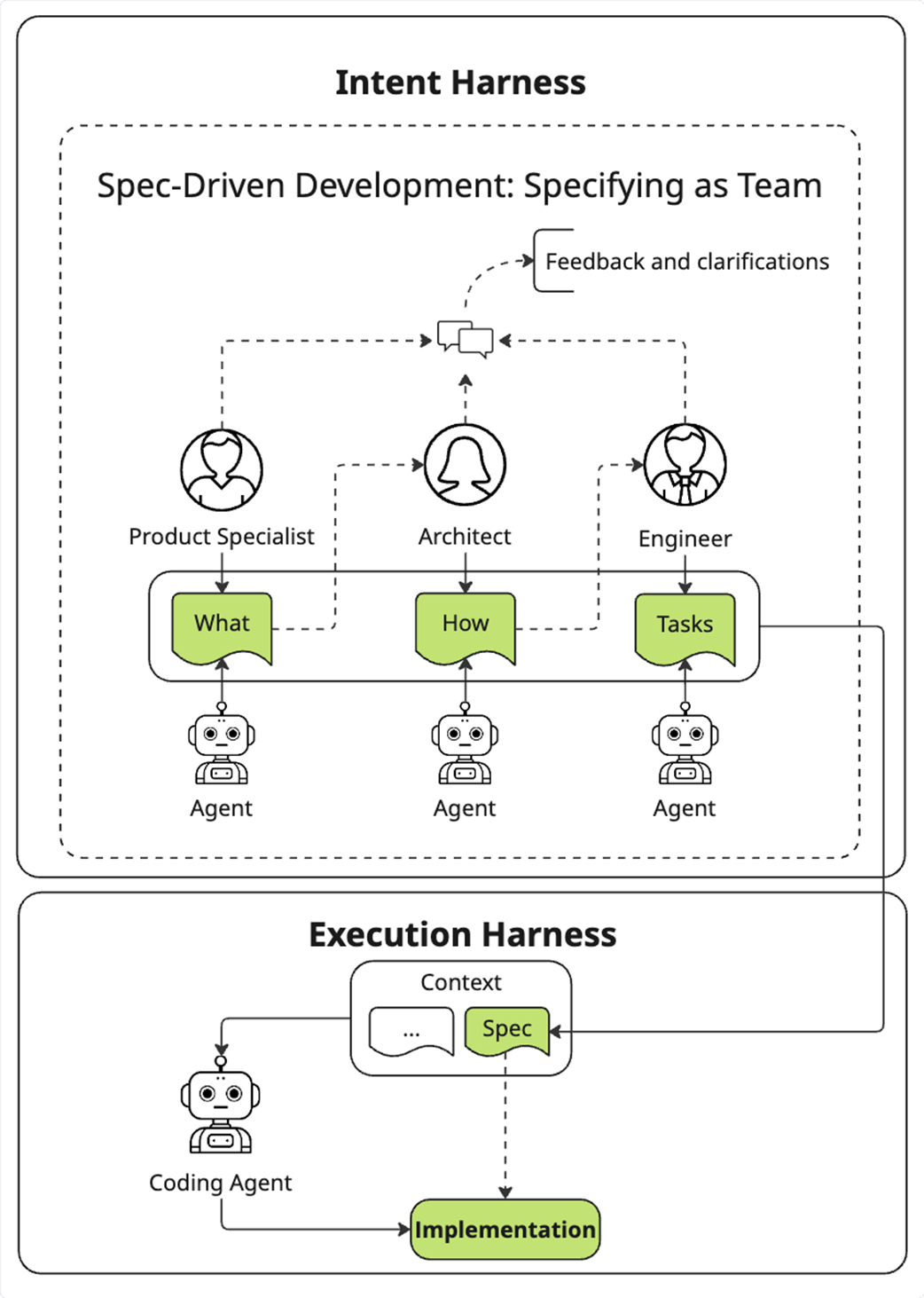
Use the stakeholder diagram to see how product, architecture, and engineering contribute to specification authoring. section 4.1.1