A pull request build is an automated job triggered when a pull request is raised. It validates proposed API changes before integration and reports its status directly in the pull request interface, giving submitters and reviewers fast feedback. section 8.7
A practical API pull request build can:
- Run API linting against definition files and fail on ERROR-level violations. section 8.7
- Compare old and new definition files and fail when breaking changes are detected. section 8.7
- Lint Markdown guide documentation, run custom scripts, and preserve warnings for reviewer inspection even when they do not fail the build. section 8.7
- Require governance approval through code owners after automated minimum design-review criteria pass. section 8.3
Fast feedback policy
Keep the pull request build to no more than five minutes where practical. Parallelize independent jobs to reduce waiting time, then let reviewers investigate warnings and other findings that did not fail the build. section 8.11.2 section 8.7
Figure 8.2 The process the Acme team uses to check that PRs satisfy the minimum design review criteria and get approval from the governance team
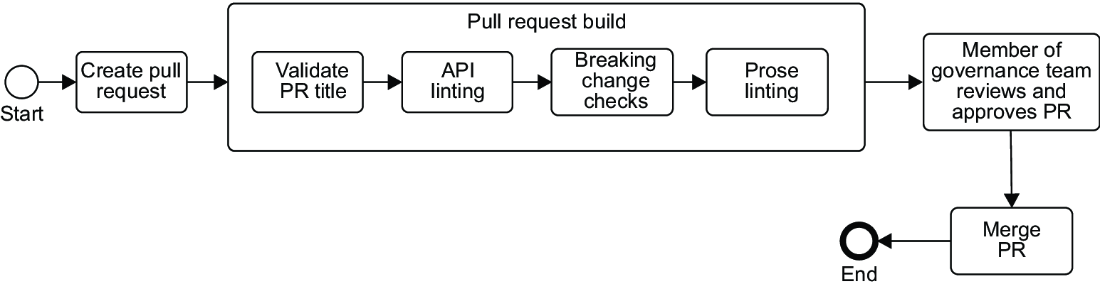
Use the process diagram to trace automated PR checks through governance approval and the merge decision. section 8.3
