Query rewriting
Query rewriting is the transformation of a query into an alternative formulation intended to better support its execution or retrieval while preserving its intended meaning or behavior.
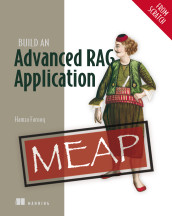
Build an Advanced RAG Application (From Scratch)
A query rewriter is a component that reformulates user queries to clarify references, expand terminology, and add appropriate specificity without inventing constraints.
- How it is used
- Improves RAG retrieval by making routed user queries semantically precise before vector search.
- How deep it goes
- Provides LLM prompt rules, conversation-history handling, concrete transformations, and unified-pipeline placement; it does not alter index or embedding internals.
- Examples
- Uses Q3 revenue, Uber and Lyft comparison, and AWS Lambda scaling-and-timeout requests to demonstrate clarification.
- What you can do after
- Build it from scratch as an LLM-based rewriter that preserves intent and feeds optimized queries into a routed retrieval pipeline.
Read how Build an Advanced RAG Application (From Scratch) explains query rewriting →
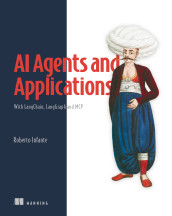
AI Agents and Applications
Query rewriting is a technique that transforms an original search request into one or more clearer or more targeted queries to improve retrieval results.
- How it is used
- Improves web search and RAG retrieval by transforming user requests into queries better suited to search.
- How deep it goes
- Builds single-query and multi-query chains, integrates retrieval and answer synthesis, and discusses ranking and search latency.
- Examples
- Uses championship web searches and Cornwall travel questions to demonstrate alternative queries and retrieval.
- What you can do after
- Apply it via LangChain and ChromaDB to rewrite questions, retrieve context, and preserve original questions for answer synthesis.
Read how AI Agents and Applications explains query rewriting →
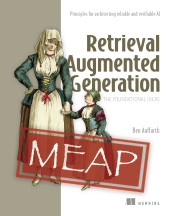
Retrieval Augmented Generation, The Foundational Ideas
Query reformulation is the transformation of an existing search query into an alternative formulation intended to retrieve more suitable information.
- How it is used
- Improves retrieval by translating, expanding, or revising queries when wording, relevance, ambiguity, or missing information limits the first search.
- How deep it goes
- Covers keyword conversion and iterative reformulation with a short implementation pattern, but defers detailed rewrite-model training.
- Examples
- Uses a Company Y director lookup, an outdated sanctions database, and a bounded Python agentic retrieval loop.
- What you can do after
- Apply it via an OpenAI-based agentic RAG loop that retrieves, evaluates, reformulates gaps, and stops after a bounded number of iterations.
Read how Retrieval Augmented Generation, The Foundational Ideas explains query rewriting →

AI-Powered Search
Query rewriting is the transformation of an original search query into an alternative query that preserves or enhances its intended retrieval behavior.
- How it is used
- Improves search recall, precision, and ranking by transforming parsed and enriched user queries before execution.
- How deep it goes
- Explains expansion, minimum matching, boosting, and engine translation, but stops short of evaluating rewrite quality.
- Examples
- Uses “vibranium” expansion, relatedness weights, minimum-match thresholds, boosts, and Solr query-tree transformations.
- What you can do after
- Builds rewritten search requests with related terms, matching constraints, ranking boosts, and engine-specific syntax.
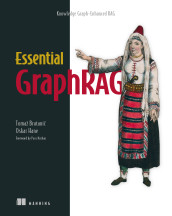
Essential GraphRAG
Query rewriting is the transformation of a user query into a formulation that better matches the language and context of target documents.
- How it is used
- Improves RAG retrieval accuracy and recall when query wording fails to match relevant document language.
- How deep it goes
- Explains the terminology gap, names major strategies, and extends matching to summaries, paraphrases, and hypothetical questions.
- Examples
- Uses hypothetical document retrieval, step-back prompting, contextual summaries, paraphrases, and hypothetical question embeddings.
- What you can do after
- Apply it via hypothetical document retrieval or step-back prompting to improve document matching and retrieved-answer relevance.

The Art of AI Product Development
A retrieval technique that rewrites an input query into a form better suited to searching a target information collection.
- How it is used
- Improves retrieval precision when users submit vague or poorly structured questions to a retrieval-augmented generation system.
- How deep it goes
- Demonstrates rewriting, expansion, and classification through product examples without detailing implementation internals.
- Examples
- Uses broad AI-trend questions, SaaS and workflow-automation subqueries, and irrelevant healthcare or finance results.
- What you can do after
- Apply it by converting broad questions into focused subqueries and routing them toward relevant sources.
Read how The Art of AI Product Development explains query rewriting →
Grokking AI Applications
A technique that rephrases a user query to improve its semantic match with retrievable document content.
- How it is used
- Improves retrieval in RAG pipelines when users’ wording does not align with document phrasing.
- How deep it goes
- Explains the rationale, HyDE variant, translation use, and Langflow placement without detailing prompt design or evaluation.
- Examples
- Uses a thirsty-customer menu question, hypothetical answers, and English-to-Spanish query translation.
- What you can do after
- Apply it via Langflow by placing a Prompt Template and LLM between Chat Input and ChromaDB.
Read how Grokking AI Applications explains query rewriting →
Also covered in
- LLM Customization and Fine-TuningIn early access (MEAP)
- PostgreSQL Mistakes and How to Avoid Them
- Building Reliable AI Systems
What to know first
- language modelA language model is a computational model that represents patterns in linguistic sequences to assign probabilities, predict, generate, or evaluate language.
- retrieval-augmented generationRetrieval-augmented generation is a technique that retrieves relevant information from external sources and supplies it as context to a generative model when producing an output.
- similarity searchSimilarity search is a retrieval technique that finds or ranks items by their similarity to a query, often by comparing feature or vector representations under a similarity or distance measure.
- embeddingAn embedding is a numerical vector representation of an item in a feature space, encoding selected properties or relationships for computational tasks such as comparison or retrieval.
Related concepts
- language modeluses · A language model is a computational model that represents patterns in linguistic sequences to assign probabilities, predict, generate, or evaluate language.
- step-back promptingincludes · Step-back prompting is a prompting technique that reframes a specific question as a broader, more abstract question before addressing the original question.
- HyDEincludes · HyDE is a retrieval technique that generates hypothetical document or answer content from a query and uses that content or its embedding to retrieve relevant documents.
- dialogueused by · Dialogue is an ordered exchange of related messages across successive turns between participants or an interactive system and its users.
- ruleimplemented by · A PostgreSQL rule is a query-rewrite definition attached to a database relation that modifies or adds statements when specified events occur.
Questions about query rewriting
What is query rewriting?
Query rewriting is the transformation of a query into an alternative formulation intended to better support its execution or retrieval while preserving its intended meaning or behavior.
Which Manning books explain query rewriting?
Build an Advanced RAG Application (From Scratch), AI Agents and Applications, Retrieval Augmented Generation, The Foundational Ideas, AI-Powered Search, Essential GraphRAG, The Art of AI Product Development and Grokking AI Applications.
What should I know before learning query rewriting?
Manning books that teach query rewriting usually introduce language model, retrieval-augmented generation, similarity search and embedding first.
What kinds of query rewriting are there?
Kinds of query rewriting include step-back prompting and HyDE.
What is query rewriting also called?
Query rewriting is also called query reformulation.
These guides are generated from the text of Manning books by Manning's knowledge graph and link to the sections they draw on. The full books are available on liveBook and at manning.com.