Question wording is the deliberate choice and arrangement of language used to formulate a survey question. Precise, unbiased wording reduces ambiguity, response bias, and measurement error, producing more accurate and reliable self-report data. section 6.2.2
Avoid wording problems that can distort responses:
- Ambiguous questions, such as “Do you like our software?”, leave respondents unsure what aspect to evaluate. section 6.2.2
- Leading language, such as “Wouldn’t you agree...?”, suggests a desired answer or embeds assumptions. section 6.2.2
- Double-barreled questions combine two distinct concepts, making it difficult to answer each part accurately. section 6.2.2
From general preference to actionable feedback
Replace “Do you like our software?” with “What aspects of our software do you find most helpful in your day-to-day work?” The revised question specifies the subject of evaluation and elicits more useful detail. section 6.2.2
Figure 6.7 How do you think the wording of these questions might affect the responses you receive?
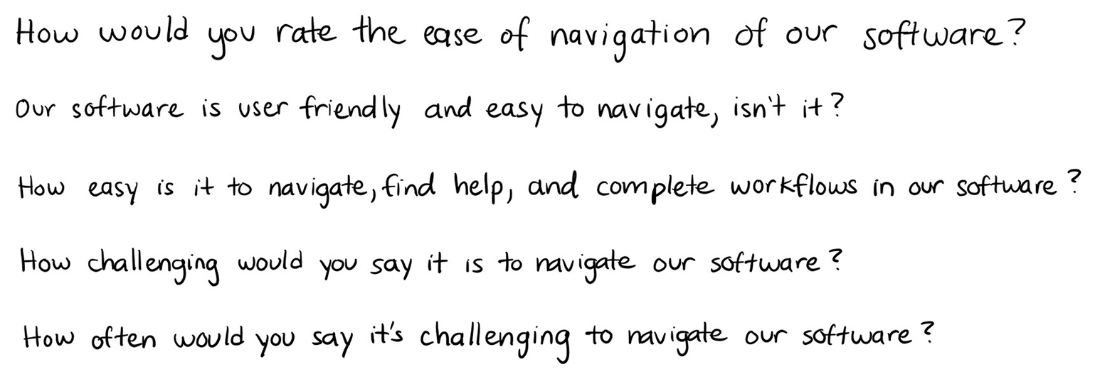
Compare alternative question structures and consider how presentation may change the answers respondents provide. section 6.2.2
